Walk into any bodybuilding forum and you will find dozens of threads from athletes alarmed by sudden, painful breakouts on their back, chest, and shoulders — breakouts that did not exist before their cycle began. The connection is not coincidental: anabolic-androgenic steroids (AAS) are among the most potent triggers of severe acne recognized by clinical dermatology. What makes steroid-induced acne particularly concerning is that it can escalate rapidly from minor pustules to acne conglobata or the potentially disfiguring acne fulminans — conditions associated with deep scarring, systemic fever, and joint pain. This article examines the precise biological mechanism behind steroid-induced acne, differentiates between the two major steroid classes, ranks individual compounds by risk, and outlines evidence-based treatment approaches.
● Executive Summary
- Yes, steroids cause acne — both anabolic-androgenic steroids (AAS) and corticosteroids, through distinct but documented mechanisms.
- AAS stimulate androgen receptors on sebocytes, causing sebaceous gland hypertrophy and excess sebum production that fuels Cutibacterium acnes proliferation.
- Corticosteroid acne is immune-mediated, typically monomorphic, and appears 2–5 weeks after initiating oral steroids such as prednisone.
- Trenbolone and testosterone in high doses carry the highest acne risk among AAS; Anavar and Primobolan carry comparatively lower risk.
- Acne fulminans is a dermatological emergency: fever above 38°C, ulcerating skin lesions, and systemic inflammation require immediate medical evaluation.
- Combining isotretinoin with AAS can paradoxically trigger acne fulminans and poses compounded hepatotoxicity risk.
The Biology: How Steroids Trigger Acne at the Cellular Level
Androgen Receptor Stimulation and Sebaceous Gland Hypertrophy
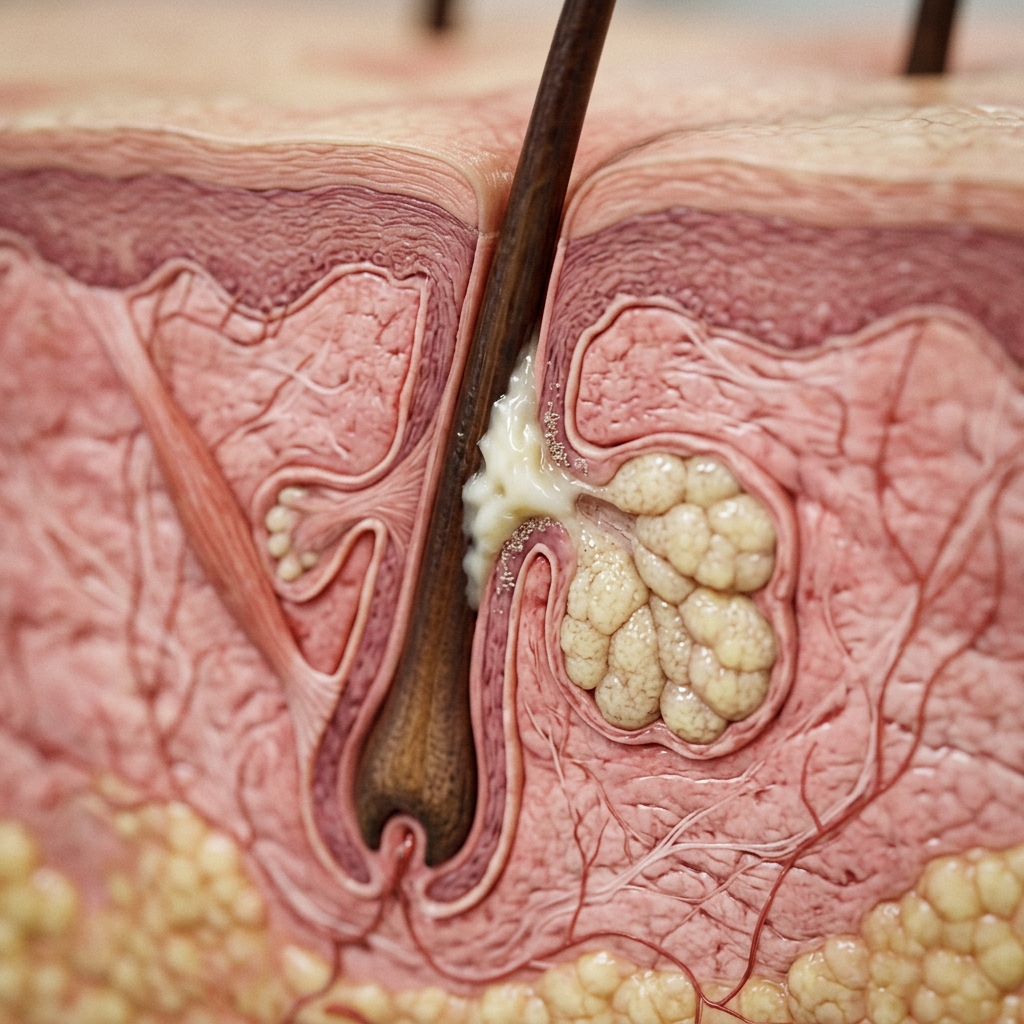
The pilosebaceous unit — the anatomical structure comprising a hair follicle and its associated sebaceous gland — is the primary target through which androgens regulate skin biology. Sebocytes (the lipid-producing cells of the sebaceous gland) express androgen receptors at high density. When exogenous AAS enter circulation and bind to these androgen receptors, they trigger a signaling cascade that promotes sebocyte proliferation, gland enlargement (hypertrophy), and dramatically elevated sebum synthesis — a condition clinically described as seborrhea.
Endogenous testosterone is converted intracellularly to dihydrotestosterone (DHT) by the enzyme 5-alpha reductase, which is present in high concentrations within the sebaceous gland. DHT has a binding affinity for the androgen receptor approximately five times greater than testosterone itself, making it a highly potent driver of sebaceous activity. Many synthetic AAS bypass this conversion pathway yet still bind androgen receptors with high affinity, producing comparable or even more pronounced sebocyte stimulation. The result is measurably enlarged sebaceous glands with output of sebum that may be many times the physiological baseline.
How Excess Sebum Creates the Perfect Bacterial Environment
Excess sebum does not cause acne in isolation — it is the combination of hyperseborrhea, abnormal follicular keratinization, and bacterial proliferation that produces inflammatory lesions. When the pilosebaceous duct becomes occluded by accumulated sebum and desquamated keratinocytes, the anaerobic microenvironment within the follicle becomes ideal for Cutibacterium acnes (formerly Propionibacterium acnes), a gram-positive, lipophilic bacterium that constitutes a major component of normal skin flora. C. acnes metabolizes sebaceous triglycerides into pro-inflammatory free fatty acids, which chemically irritate the follicular wall and initiate the inflammatory cascade that produces pustules, papules, and — in severe cases — cysts and nodules.
According to the NIH MedlinePlus clinical overview of acne vulgaris, the interaction between excess sebum, bacterial colonization, and follicular obstruction is the unified pathophysiological mechanism underlying all forms of acne. Exogenous AAS dramatically accelerate this process by flooding the sebaceous gland with androgenic signaling far beyond the physiological range.
The Role of TLR2 Upregulation in Steroid-Induced Inflammation
Beyond the direct androgenic effect on sebum production, emerging evidence suggests that AAS upregulate Toll-Like Receptor 2 (TLR2) expression on keratinocytes and monocytes. TLR2 is a pattern recognition receptor that detects cell-wall components of C. acnes and triggers the release of pro-inflammatory cytokines including interleukin-1β (IL-1β), IL-6, and tumor necrosis factor-alpha (TNF-α). An upregulated TLR2 response means the immune system reacts to even normal levels of C. acnes with disproportionate inflammation — a mechanistic explanation for why steroid users with previously clear skin develop severe, rapidly progressing cystic acne rather than mild comedonal disease.
Anabolic Steroids vs. Corticosteroids: Two Different Types of Steroid Acne
Anabolic Steroid Acne (Bodybuilding Acne / Doping Acne)
AAS-induced acne, sometimes termed “bodybuilding acne” or “doping acne” in the clinical literature, is a hormonally driven condition characterized by the androgenic cascade described above. It is typically polymorphic — presenting with a mixture of open and closed comedones, inflammatory papules and pustules, and, in severe cases, deep nodules and cysts. Distribution follows the anatomical density of sebaceous glands: the back (truncal acne), chest, shoulders, and upper arms are disproportionately affected, though facial involvement is also common. Severity correlates broadly with the androgenicity of the compounds used, the dose, and the duration of exposure. For a comprehensive review of anabolic steroid pharmacology and adverse effects, the NCBI StatPearls resource provides a detailed clinical overview.
AAS acne tends to be more severe, more refractory to standard topical treatments, and more prone to scarring than typical adolescent acne vulgaris. This is primarily because the androgenic stimulus is continuous and supraphysiological — the root cause remains active for the entire duration of the cycle, overwhelming the capacity of topical agents to control sebum production at source.
Corticosteroid-Induced Acne: Prednisone, Dexamethasone, and Topical Steroids
Corticosteroid acne operates through an entirely different mechanism. Glucocorticoids such as prednisone, prednisolone, and dexamethasone do not stimulate androgen receptors. Instead, they suppress immune function and alter the follicular microbiome, creating conditions in which normally low-pathogenicity organisms proliferate. The result is a characteristically monomorphic eruption — uniform small, dome-shaped pustules and papules that appear predominantly on the trunk, upper arms, and face within 2–5 weeks of initiating oral or high-dose inhaled corticosteroid therapy. The absence of comedones is a clinical hallmark that differentiates corticosteroid acne from AAS-induced acne. The Mayo Clinic’s overview of prednisone side effects confirms skin changes, including acneiform eruptions, among the recognized adverse effects of systemic corticosteroid use.
Topical corticosteroid misuse represents a distinct sub-category. Chronic application of potent topical steroids to the face — a practice regrettably common in certain regions for skin-lightening purposes — leads to steroid rosacea and perioral dermatitis: conditions characterized by erythema, telangiectasia, and papulopustular lesions that are often misidentified as acne vulgaris but respond paradoxically worse to acne treatments if the underlying corticosteroid dependency is not addressed.
| Compound | Androgenic Index | Acne Risk | Aromatizes? | Clinical Notes |
|---|---|---|---|---|
| Trenbolone | 500 | VERY HIGH | No | Does not convert to estrogen; extremely harsh androgenic environment; among the most acnegenic compounds known |
| Testosterone (high dose) | 100 (reference) | HIGH | Yes | Dose-dependent risk; converts to DHT via 5α-reductase; backbone of most cycles |
| Anadrol (Oxymetholone) | 45 | HIGH | Yes (atypically) | Notorious for severe truncal acne; also carries significant hepatotoxicity |
| Dianabol (Methandrostenolone) | 40–60 | HIGH | Yes | Oral 17α-alkylated; rapid onset acne; liver stress amplifies isotretinoin contraindication |
| Nandrolone (Deca-Durabolin) | 37 | MODERATE | Low | Progesterone-receptor active; intermediate acne risk; can still trigger breakouts in predisposed users |
| Anavar (Oxandrolone) | 24 | LOW–MODERATE | No | Milder androgenic profile; skin effects generally less severe; not zero risk |
| Primobolan (Methenolone) | 44–57 | LOW | No | Favored for relatively mild skin impact; commonly used in recomposition phases |
Which Steroids Cause the Worst Acne? Compound-by-Compound Breakdown
High-Androgen AAS: Testosterone, Trenbolone, Anadrol, and Dianabol
Steroid-induced acne severity correlates closely with a compound’s androgenic potency at the androgen receptor. Trenbolone sits at the apex of acne risk among commonly used AAS. With an androgenic index approximately five times that of testosterone, it does not aromatize to estrogen, which means the androgenic signal is not modulated by any estrogenic counterbalance. Users of trenbolone-based cycles consistently report among the most severe cases of truncal acne encountered in non-medical AAS use, including progression to nodular and cystic disease within weeks of cycle initiation. High-dose testosterone (particularly testosterone enanthate or cypionate at bodybuilding doses of 400–1000 mg/week or higher) carries significant acne risk due to high DHT conversion. Anadrol and Dianabol are oral 17-alpha-alkylated compounds with high androgenic activity and documented association with rapid-onset acne, frequently affecting the back, chest, and shoulders in a distribution referred to clinically as “bodybuilding back acne.” Both compounds also impose hepatotoxic load, which is clinically important when discussing potential isotretinoin co-administration.
Lower-Risk Compounds: Anavar, Primobolan, and Nandrolone
Anavar (oxandrolone) has a comparatively low androgenic index and does not convert to DHT through the classical 5-alpha reductase pathway, making it one of the milder AAS in terms of sebaceous gland stimulation. Nonetheless, individual sebaceous gland sensitivity varies enormously between users — genetic predisposition to acne remains the most important modifier of any compound’s dermatological impact. Primobolan (methenolone) is similarly regarded as relatively mild on the skin, which partly explains its popularity among users seeking to minimize cosmetic adverse effects. Nandrolone (Deca-Durabolin) occupies an intermediate position: its androgenic index is low, but its activity at the progesterone receptor and the high androgenic environment created when stacked with testosterone can still precipitate meaningful acne in genetically susceptible individuals. No AAS compound can be considered categorically “acne-safe” across all users.
Recognizing Steroid Acne: Symptoms, Locations, and Warning Signs
Monomorphic Papules vs. Polymorphic Cystic Lesions
The clinical morphology of steroid acne differs meaningfully depending on the causative agent. Corticosteroid-induced acne presents as a monomorphic eruption — highly uniform small papules and pustules in a similar stage of development, without the open and closed comedones (blackheads and whiteheads) that are characteristic of acne vulgaris. This uniformity is a useful diagnostic clue. AAS-induced acne, by contrast, is characteristically polymorphic: a heterogeneous mixture of comedones, inflammatory papules, pustules, nodules, and deep painful cysts in varying stages of development. The most commonly affected sites are the upper back (truncal acne), chest, shoulders, and upper arms — anatomical regions with the highest density of sebaceous follicles outside the face. Facial involvement, particularly along the jaw line, chin, and upper back, is also frequently reported. DermNet NZ’s clinical overview of steroid acne provides useful photographic and diagnostic guidance on differentiating these presentations.
A clinically important differential diagnosis in this patient population is Malassezia folliculitis (formerly known as Pityrosporum folliculitis), a fungal condition caused by the overgrowth of Malassezia yeast in follicles. AAS and corticosteroids both create conditions favorable to Malassezia proliferation. Clinically, Malassezia folliculitis presents as small, uniform, pruritic (itchy) papules predominantly on the upper back, chest, and shoulders — closely mimicking bacterial acne but responding poorly, and potentially worsening, with standard antibiotic acne treatments. Correct diagnosis requires potassium hydroxide (KOH) preparation or skin biopsy.
Acne Conglobata and Acne Fulminans: When to Seek Emergency Care
Acne conglobata is a severe, chronic form of nodulocystic acne characterized by interconnecting abscesses, sinus tracts, and grouped comedones that result in significant deep scarring. It can occur de novo in predisposed individuals or be precipitated and dramatically worsened by androgenic stimulation from AAS. Unlike acne fulminans, acne conglobata is not typically accompanied by systemic symptoms, though it is profoundly disfiguring and refractory to conventional therapy.
⚠ Acne Fulminans — Dermatological Emergency: Seek Immediate Care
Acne fulminans is a rare but potentially life-threatening eruption associated with AAS use, isotretinoin initiation, and — critically — the combination of both. It requires immediate dermatological or emergency medical evaluation. Warning signs include:
- Sudden-onset, rapidly ulcerating cystic and nodular lesions on the trunk, chest, and upper back
- Systemic fever above 38°C (100.4°F) — absent in standard acne, present in acne fulminans
- Arthralgia and myalgia (joint and muscle pain), particularly in the sternoclavicular and sacroiliac joints
- Elevated white blood cell count, elevated ESR, and frank anemia on laboratory evaluation
- Potential osteolytic bone lesions in severe cases — documented in published case series
- Hemorrhagic, crusting ulcers that replace typical acne pustules within days of onset
PubMed clinical evidence on acne fulminans documents its association with AAS and isotretinoin. Treatment requires systemic corticosteroids (prednisolone) to suppress the inflammatory surge, often followed by carefully managed isotretinoin re-introduction. Do not attempt self-treatment. Seek emergency dermatology consultation immediately.
Other Skin Side Effects of Steroids Beyond Acne
Skin Thinning, Stretch Marks, and Telangiectasia
Acne is the most widely discussed skin side effect of steroid use, but the dermatological impact extends considerably further. Skin atrophy — thinning of the dermis and epidermis — is a well-characterized consequence of prolonged topical corticosteroid use. Glucocorticoids suppress collagen and elastin synthesis by fibroblasts, reducing the structural integrity of the dermal matrix. This manifests as fragile, easily bruised skin with visible vasculature. Telangiectasia (permanently dilated superficial capillaries) is a related finding, particularly prominent on the face following chronic topical corticosteroid misuse.
Striae distensae (stretch marks) are common in both AAS and corticosteroid users, though the mechanism differs by agent. With AAS, the primary driver is rapid muscle hypertrophy and body mass gain that mechanically stretches skin faster than collagen remodeling can accommodate. Corticosteroids directly inhibit collagen synthesis, making the dermis susceptible to tearing even without dramatic physical growth. Striae from steroid use tend to be more numerous, deeper, and more widely distributed than those seen in physiological weight gain — involving the inner thighs, pectorals, axillae, and lateral flanks in addition to the abdomen.
Hair Changes: Scalp Hair Loss and Body Hair Growth
The androgenic environment created by AAS has paradoxically opposite effects on scalp versus body hair. Scalp follicles in genetically predisposed individuals are sensitive to DHT, which progressively miniaturizes them — accelerating androgenic alopecia (male-pattern baldness) in both male and female AAS users. This is an irreversible process: once hair follicles miniaturize beyond a critical threshold, cessation of AAS does not restore hair density. Conversely, body and facial hair follicles respond to androgen excess with stimulated growth — a phenomenon termed hirsutism, particularly significant in female AAS users. Diffuse oily skin persisting even in the absence of active acne lesions is another common complaint among AAS users that reflects ongoing sebaceous gland upregulation. The National Institute on Drug Abuse (NIDA) catalogs these androgenic side effects in their comprehensive review of anabolic steroid consequences.
Treatment Options for Steroid-Induced Acne
On-Cycle Skincare: Topical Treatments and Preventive Measures
Managing steroid-induced acne while a cycle is ongoing requires accepting that the root androgenic stimulus cannot be fully addressed topically. That said, well-chosen topical interventions can meaningfully reduce severity. Benzoyl peroxide (BP) at concentrations of 2.5–10% is the cornerstone of empirical topical therapy: it delivers bactericidal oxygen to the anaerobic follicular environment, reducing C. acnes colonization and simultaneously preventing antibiotic resistance. A BP wash applied to the back and chest during showering is a practical first-line measure. Topical retinoids — tretinoin (0.025–0.1%) or adapalene (0.1–0.3%) — normalize follicular keratinization, reduce comedone formation, and have modest anti-inflammatory properties. They require weeks to months of consistent use before full benefit is apparent and cause initial dryness and desquamation.
Salicylic acid cleansers (2%) provide mild keratolytic and comedolytic activity suited for daily use. Occlusive clothing (tight synthetic fabrics, compression garments that trap sweat against skin) should be minimized, as the combination of friction, heat, and sebum occlusion compounds follicular blockage — a phenomenon termed acne mechanica. Non-comedogenic, oil-free moisturizers help maintain skin barrier function without aggravating occlusion.
Medical Interventions: Antibiotics, Retinoids, and the Isotretinoin Paradox
When topical measures are insufficient — which is frequently the case in moderate-to-severe AAS-induced acne — systemic interventions become necessary. Oral antibiotics, particularly doxycycline (100 mg once or twice daily) or minocycline (50–100 mg twice daily), reduce C. acnes burden and exert direct anti-inflammatory effects independent of their antimicrobial activity. Doxycycline is generally preferred for its better tolerability profile and evidence base in acne. Antibiotic therapy provides meaningful symptomatic control but does not resolve the underlying androgenic driver and should be used for defined courses (typically 3–6 months) to minimize resistance development.
The most potent systemic therapy for severe acne is isotretinoin (13-cis-retinoic acid), an oral retinoid that achieves sustained remission in the majority of patients with severe nodulocystic acne through multi-modal action: it reduces sebum production by up to 90%, normalizes follicular keratinization, reduces C. acnes colonization, and exerts powerful anti-inflammatory effects. However, isotretinoin carries a critical paradox when considered in the context of AAS use.
Multiple published case reports and case series document that initiating isotretinoin during or shortly after AAS use can paradoxically trigger acne fulminans — the severe systemic eruption described above. The mechanism is not fully elucidated but is thought to involve isotretinoin’s acute pro-inflammatory effects in the first weeks of therapy overwhelming an already highly sensitized pilosebaceous unit. Additionally, both oral isotretinoin and 17-alpha-alkylated AAS (Dianabol, Anadrol, Winstrol) are independently hepatotoxic; their combination multiplies the risk of clinically significant liver injury. Any consideration of isotretinoin in a patient using or recently having used AAS must be managed by a qualified dermatologist with appropriate laboratory monitoring.
Post-Cycle Recovery: When Does Steroid Acne Clear?
The natural history of AAS-induced acne following cycle cessation is generally favorable, though timeline varies with individual genetics and the severity of the acne at its peak. In the majority of cases, sebum production begins normalizing within 4–8 weeks as endogenous hormonal regulation is gradually restored. Active inflammatory lesions typically resolve over 3–6 months post-cycle. Post-inflammatory hyperpigmentation (dark marks) may persist for several additional months. Significant scarring from deep cysts or nodules — unfortunately common in severe steroid acne — requires longer-term dermatological management including chemical peels, microneedling, or laser resurfacing procedures.
Post-cycle therapy (PCT) — typically involving selective estrogen receptor modulators (SERMs) such as tamoxifen or clomiphene, and sometimes aromatase inhibitors — serves the primary purpose of restoring endogenous testosterone production. As endogenous androgens normalize, sebaceous gland activity also progressively decreases. This represents an indirect dermatological benefit of well-conducted PCT: faster hormonal normalization translates to faster skin recovery. Persistent acne beyond 6 months post-cycle should be evaluated by a dermatologist, as it may indicate prolonged hormonal disruption or an independent acne vulgaris condition requiring independent treatment.
Who Is Most at Risk? Genetics, Dose, and Duration Factors
The Role of Genetic Predisposition and Sebaceous Gland Sensitivity
Not every individual who uses AAS develops clinically significant acne. Genetic factors — specifically the density and sensitivity of androgen receptors on sebocytes, the enzymatic activity of 5-alpha reductase in skin tissue, and individual baseline sebaceous gland output — are the primary determinants of who will and will not develop severe steroid-induced acne. A family history of severe acne vulgaris or androgenic alopecia is a clinically meaningful predictor of heightened risk. Adolescents represent a particularly high-risk subgroup: their pilosebaceous units are already in a state of androgen-driven activation driven by the hormonal changes of puberty, and the superimposition of exogenous androgenic stimulation from AAS can produce extremely rapid and severe acne progression.
Individual sebaceous gland androgen receptor density is not a parameter that can currently be measured in routine clinical practice, but its clinical relevance is evidenced by the broad spectrum of acne severity observed among individuals using identical compounds and doses. Some users maintain clear skin on high-dose testosterone; others develop severe nodulo-cystic disease on modest Anavar doses. This variability underscores why anecdotal reports from peer users about compound “safety” for skin health have minimal predictive value for any individual.
How Dose, Cycle Length, and Stacking Amplify Acne Risk
Within a given individual, the dose-response relationship between AAS dose and acne severity is generally consistent. Higher doses deliver more androgenic ligand to sebaceous gland receptors, driving proportionally greater sebum output. Longer cycles afford less time for skin recovery between exposures and allow deeper, more established comedone formation. Perhaps most significantly, stacking multiple androgenic compounds amplifies the acne risk in a manner that may be supra-additive rather than merely additive: each compound adds to the androgenic burden, and the simultaneous activation of multiple downstream androgenic pathways creates a biochemical environment far more hostile to skin health than any single compound at equivalent doses. A classic high-risk stack — testosterone enanthate, trenbolone acetate, and Anadrol in a bulking cycle — combines three highly androgenic agents whose cumulative impact on the pilosebaceous unit is severe by any dermatological metric.
Frequently Asked Questions About Steroids and Acne
Does every steroid user develop acne?
No. Acne development among AAS users is strongly modulated by individual genetics, particularly the density and sensitivity of androgen receptors in the sebaceous gland and 5-alpha reductase activity in skin tissue. A meaningful proportion of AAS users — particularly those using lower-androgenicity compounds at conservative doses — experience little to no acne. However, the risk increases substantially with higher doses, more androgenic compounds, longer cycle durations, stacking multiple compounds, and a personal or family history of acne vulgaris. Adolescent users face the highest baseline risk given the already androgen-sensitized state of their pilosebaceous units.
How long does steroid acne last after stopping a cycle?
For most users, active inflammatory acne lesions begin to improve within 4–8 weeks of cycle cessation as endogenous hormonal production gradually recovers. The majority of AAS-induced acne resolves over a 3–6 month post-cycle period. Post-inflammatory hyperpigmentation may persist for several months beyond lesion resolution. Significant nodular or cystic scarring requires dedicated dermatological treatment. Well-conducted post-cycle therapy (PCT) with SERMs can facilitate faster hormonal normalization and therefore faster skin recovery. Acne persisting beyond 6 months post-cycle warrants dermatological evaluation to rule out an underlying independent acne condition.
Which anabolic steroids are most likely to cause acne?
Trenbolone carries the highest acne risk of commonly used AAS due to its exceptionally high androgenic potency (androgenic index approximately 500 relative to testosterone’s baseline of 100) and lack of aromatization, which removes any estrogenic modulation of the androgenic signal. High-dose testosterone, Anadrol (oxymetholone), and Dianabol (methandrostenolone) also carry high acne risk. Nandrolone (Deca-Durabolin) presents intermediate risk. Anavar (oxandrolone) and Primobolan (methenolone) carry comparatively lower — though not zero — acne risk. Individual genetic sensitivity remains the most important variable in any user’s actual experience.
Can you take isotretinoin (Accutane) while on steroids?
This combination carries serious clinical risks and should only be undertaken under close dermatological supervision. Two major concerns apply: First, isotretinoin can paradoxically trigger acne fulminans — a severe systemic inflammatory eruption — when initiated during or shortly after AAS use, particularly in the first weeks of treatment when its pro-inflammatory effects are most pronounced. Second, isotretinoin is hepatotoxic, and combining it with 17-alpha-alkylated oral AAS (Dianabol, Anadrol, Winstrol) compounds the liver stress significantly. Isotretinoin should generally not be started while actively on an AAS cycle. If prescribed post-cycle, liver function monitoring is mandatory. Always consult a qualified dermatologist.
Is steroid acne the same as regular acne vulgaris?
Steroid-induced acne shares the same fundamental pathophysiology — pilosebaceous unit obstruction, Cutibacterium acnes proliferation, and follicular inflammation — but differs in important clinical respects. AAS acne is driven by supraphysiological androgenic stimulation that standard acne never experiences, making it typically more severe, more widespread (particularly on the trunk), and less responsive to conventional topical therapy as long as the androgenic stimulus persists. Corticosteroid acne is distinctively monomorphic (uniform small pustules) and typically lacks comedones — a morphological feature that distinguishes it from both AAS acne and classical acne vulgaris. Additionally, steroid acne can escalate to clinical entities (acne conglobata, acne fulminans) that are rarely seen in standard acne vulgaris without an exogenous androgenic or pharmacological trigger.
The information presented in this article is intended for educational purposes only and does not constitute medical advice. Individuals experiencing severe or rapidly progressing acne, particularly with systemic symptoms, should seek evaluation by a qualified dermatologist or physician. References to anabolic-androgenic steroids are made in the context of harm reduction and clinical education.
Get our latest guides, news, and insights highlighted in your Google Search & AI Overviews.