Scroll through any social media feed, and you’ll see fitness influencers sporting massive, single-digit body fat physiques, claiming it’s all down to chicken, broccoli, and hard work. But what does science actually say about human potential? If you’ve ever wondered how big you can get without steroids, you’re not alone. The natural limit of muscle growth is a complex mix of genetics, bone structure, and decades of consistent training. Let’s cut through the internet noise and break down the realistic boundaries of natural bodybuilding from a strict clinical and factual perspective.
Executive Summary: The Science of Natural Limits
The question of maximal natural hypertrophy has been scrutinized extensively by exercise physiologists and medical researchers. Clinical evidence dictates that drug-free muscle growth is strictly governed by endocrine profiles, genetic myostatin expression, and osteological frame size. While the first year of resistance training yields rapid “newbie gains,” biological limits eventually impose a hard physiological ceiling characterized by a curve of diminishing returns. On average, a healthy male with average genetics can expect to accumulate between 40 to 50 pounds of lean muscle tissue over a lifetime of optimized, natural training.
Understanding Your Natural Genetic Potential
Human physiology is inherently conservative; it naturally limits skeletal muscle hypertrophy to preserve metabolic energy. Unlike enhanced bodybuilders who utilize exogenous hormones to bypass biological governors, natural athletes must operate entirely within the strict parameters of their endogenous endocrine systems. To understand your ultimate genetic potential, you must first understand the biological pathways that regulate tissue growth.
The Role of Genetics in Muscle Growth
Genetics dictate a significant portion of an individual’s muscular baseline and ceiling. One of the primary biological governors of muscle mass is myostatin, a regulatory protein that actively inhibits muscle cell differentiation and growth. As clinical literature on the myostatin in muscle growth illustrates, individuals with naturally lower myostatin expression—or genetic mutations impacting this regulatory pathway—can achieve significantly more muscle mass than the general population without pharmacological intervention.
Furthermore, baseline testosterone levels, which typically range from 300 to 1,000 ng/dL in healthy adult males, provide the hormonal foundation for tissue repair and protein synthesis. However, circulating testosterone is only part of the equation. The density and sensitivity of androgen receptors located within the skeletal muscle tissue ultimately determine how effectively the body can utilize its natural hormonal production.
Why Some Lifters Progress Faster Than Others
Beyond endocrine profiles, intrinsic muscle fiber typology heavily influences the rate and absolute ceiling of natural growth. Skeletal muscle comprises Type I (slow-twitch) and Type II (fast-twitch) muscle fibers. The comprehensive science of muscle hypertrophy demonstrates that Type II fibers possess a significantly greater capacity for cross-sectional area expansion in response to mechanical tension. Individuals born with a higher ratio of Type II fibers will universally experience faster and more dramatic muscle growth compared to those dominated by endurance-oriented Type I fibers.
Additionally, anatomical structure plays a massive visual role. Muscle belly length and tendon insertion points dictate the aesthetic size of a muscle. Longer muscle bellies have greater physical room to expand, creating a much larger appearance even at the exact same total body weight as someone with shorter muscle bellies.
Measuring Your Limits: The Fat-Free Mass Index (FFMI)
While looking in the mirror or measuring biceps with a tape provides highly subjective feedback, sports scientists and researchers utilize the Fat-Free Mass Index (FFMI) to objectively measure human muscularity relative to structural height.
What is the FFMI?
The FFMI is an anthropometric formula calculated by dividing a person’s fat-free body mass (in kilograms) by their height (in meters squared). Much like the traditional Body Mass Index (BMI), it normalizes mass across different heights to create a standard baseline. However, unlike BMI, which fails entirely to distinguish between adipose tissue (fat) and muscle, the FFMI isolates lean tissue. This mathematical model provides an accurate, clinical representation of exactly how much actual contractile tissue an individual carries on their frame.
The ’25 FFMI’ Threshold Explained
The most pivotal research regarding absolute natural limits stems from a landmark Kouri et al. 1995 study. In this study, researchers analyzed 157 male athletes, carefully dividing them into recognized steroid users and non-users. The anthropometric findings established a clear demarcation line: the natural, drug-free athletes topped out at an FFMI of approximately 25.
Conversely, those actively using performance-enhancing substances frequently exceeded this 25 threshold, with heavily enhanced subjects reaching into the 30s. While rare genetic outliers (especially elite powerlifters carrying slightly higher body fat) might achieve an FFMI of 26 or 27 naturally, maintaining an FFMI exceeding 25 while simultaneously holding a shredded, single-digit body fat percentage is recognized as a strong clinical indicator of exogenous hormone use.
Frame Size and Casey Butt’s Muscular Potential Model
Endocrine factors and genetic pathways aside, your physical osteology—your actual skeletal frame—determines the absolute maximum amount of muscle weight your body can safely and structurally support.
How Bone Structure Dictates Muscle Mass
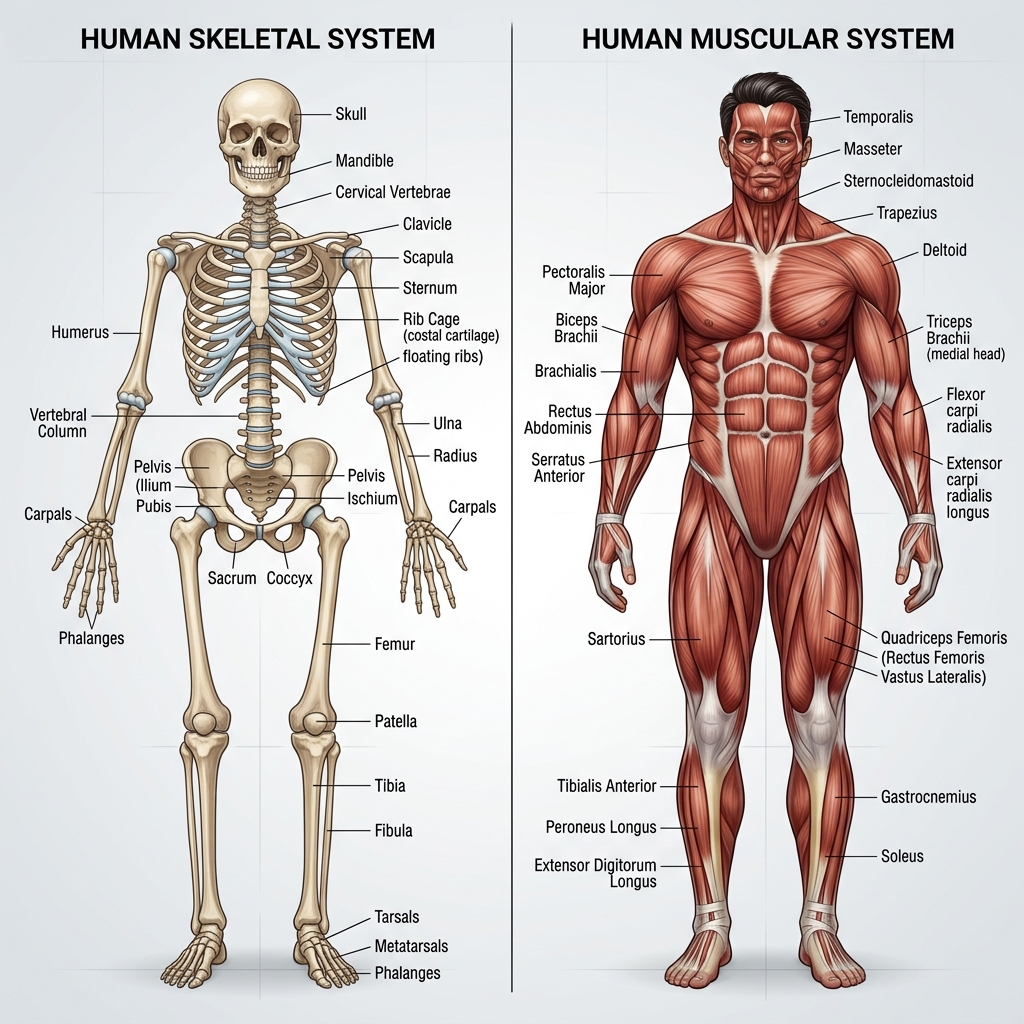
Your skeletal structure acts as the physiological foundation upon which all muscle is built. Thicker bones, broader clavicles, and denser connective tissues can logically support a greater accumulation of lean tissue. The human central nervous system acts as a protective, evolutionary governor; it will biologically limit muscle size and strength from exceeding the structural integrity of the underlying tendons and bones. Therefore, an individual with a delicate, small bone structure will naturally reach their genetic muscular ceiling at a much lower total body weight than someone with a robust, heavy skeleton.
Wrist and Ankle Measurements
Dr. Casey Butt, an independent researcher who extensively analyzed the anthropometrics of elite natural bodybuilders from the pre-steroid era (spanning from 1947 to 1953, prior to the commercial availability of synthetic testosterone), developed a highly accurate predictive formula. By inputting an individual’s height, wrist circumference, and ankle circumference, the model effectively predicts the upper limit of natural lean body mass. The wrist and ankle are utilized precisely because they are anatomical locations with minimal fat and muscle, providing a direct measurement of true bone thickness.
| Height | Average Wrist Circumference | Estimated Max Lean Body Mass (at 10% Body Fat) |
|---|---|---|
| 5’8″ (173 cm) | 6.5 inches | ~165 – 170 lbs |
| 5’10” (178 cm) | 7.0 inches | ~180 – 185 lbs |
| 6’0″ (183 cm) | 7.25 inches | ~190 – 195 lbs |
| 6’2″ (188 cm) | 7.5 inches | ~205 – 210 lbs |
*Note: These clinical estimates reflect the absolute maximum genetic peak after years of dedicated training, not starting weights.
Natural vs. Enhanced Physiques: Spotting the Difference
With the proliferation of chemical enhancements in the modern fitness industry, distinguishing between what is physiologically natural and what is synthetically driven has become exceedingly difficult for the average observer.
Visual Cues of Anabolic Steroid Use
The introduction of supraphysiologic doses of testosterone triggers structural and metabolic changes that are virtually impossible to replicate naturally. Enhanced physiques frequently display extreme, paper-thin vascularity and a dry, “granite-like” muscle density even when not preparing for a show. Because androgen receptors are disproportionately concentrated in the upper body—specifically the deltoids, trapezius muscles, and upper chest—users of performance-enhancing drugs frequently present with an exaggerated, 3D “capped” look in these specific areas.
Dermatological changes, such as severe cystic acne, profound skin flushing, and premature androgenic alopecia (hair loss), alongside a hyper-developed jawline associated with Growth Hormone abuse, serve as secondary clinical signs of pharmacological enhancement.
Realistic Expectations for Lifetime Muscle Gains
For the unenhanced lifter, muscle growth is strictly non-linear. The most widely accepted physiological model for natural progression dictates a sharp curve of diminishing returns. According to models developed by exercise physiologists like Lyle McDonald, in the first year of optimal training, a male might gain 20-25 pounds of lean tissue. In the second year, this physiological rate drops to 10-12 pounds. By the third year, gains halve again to 5-6 pounds. After four to five years of consistent training, gaining even 1 to 2 pounds of pure muscle tissue in a 12-month period is an exceptional clinical achievement.
The Natural Trajectory
Timeline: Slower, non-linear growth curve that spans 5 to 10 years.
Health: Preserved endogenous endocrine function, healthy lipid profiles, and cardiovascular longevity.
Limits: Diminishing returns hit hard after year 3. Maximum lifetime accumulation of roughly 40-50 lbs of lean tissue.
The Enhanced Trajectory
Timeline: Rapid, continuous hypertrophy that effortlessly pushes past the genetic baseline.
Risks: High clinical risk of left ventricular hypertrophy, hepatotoxicity, and dyslipidemia.
Outcomes: Requires lifelong endocrine management (TRT) post-cycle. Tissue accretion can easily exceed 60-80+ lbs over the baseline depending on the protocol.
Maximizing Your Natural Potential
While a strict genetic ceiling is an undeniable medical reality, very few individuals ever actually execute well enough to reach it. Maximizing your biological potential requires years of unwavering adherence to exercise science.
Training Volume and Progressive Overload
The primary driver of muscular adaptation is mechanical tension. To force the central nervous system to invest highly guarded metabolic resources into building new tissue, you must consistently subject the muscle fibers to greater stress. To optimize hypertrophy with resistance training, lifters must rigorously employ progressive overload—gradually increasing the weight, volume, or frequency of their lifts over months and years. Natural lifters generally respond best to moderate-to-high frequency routines, stimulating protein synthesis in each muscle group at least twice per week while carefully managing central nervous system fatigue.
The Importance of Nutrition and Caloric Surplus
Muscle cannot be synthesized in a vacuum. Generating new cellular tissue requires a caloric surplus—consuming more energetic value than the body expends. However, for a natural athlete, an aggressive “dirty bulk” is scientifically flawed. A mild surplus of 200 to 300 calories per day is optimal. Exceeding this will simply result in excessive adipose tissue accumulation, as the unenhanced body can only synthesize muscle at a biologically capped rate. Dietary protein intake must remain strictly regulated at roughly 1.6 to 2.2 grams per kilogram of body weight to ensure an adequate pool of circulating essential amino acids.
Recovery, Sleep, and Natural Testosterone
In the total absence of exogenous hormones, your natural testosterone production is highly volatile and uniquely sensitive to lifestyle variables. Muscle tissue is broken down in the gym but exclusively repaired during sleep. Chronic sleep deprivation elevates cortisol (a severely catabolic stress hormone) and drastically suppresses endogenous luteinizing hormone and testosterone production. Securing 7 to 9 hours of uninterrupted sleep, managing psychological stress, and consuming adequate dietary fats (which synthesize vital steroidal hormones) are absolute physiological prerequisites for reaching maximum natural size.
When Do You Actually Reach Your Genetic Ceiling?
Identifying the precise clinical moment you transition from “progressing slowly” to “genetically maxed out” is difficult. It requires immense self-awareness and years of accurate tracking.
Newbie Gains vs. Advanced Lifter Progress
The phenomenon commonly known as “newbie gains” occurs during the initial 6 to 12 months of resistance training. During this naive physiological period, the neuromuscular system is highly sensitive to novel stimuli, resulting in incredibly rapid strength and size adaptations. However, as the body habituates to mechanical stress, it becomes increasingly resistant to further hypertrophy. An advanced lifter with a decade of strict experience must work twice as hard and track variables meticulously just to yield a fraction of the results seen in their novice year.
Signs You Are Approaching Your Natural Limit
You are likely approaching your true biological limit when you have consistently tracked your macronutrients, optimized sleep architecture, successfully executed progressive overload without sustaining major injuries, and yet your lean body mass and maximum strength have remained completely static for over 12 to 18 consecutive months.
Clinical Warning: Plateau vs. True Limit
Do not incorrectly diagnose a training plateau as your genetic ceiling. The vast majority of recreational lifters who claim to be genetically “maxed out” are actually suffering from systemic program fatigue, insufficient caloric intake, or sub-optimal sleep architecture. True genetic limits are exceptionally rare to encounter before 5 to 10 solid years of unrelenting, flawless execution.
Frequently Asked Questions
How much muscle can a natural lifter gain in a year?
During the first year of optimized training, a male lifter can naturally gain 20 to 25 pounds of lean muscle mass. This rate diminishes rapidly due to biological adaptation, dropping to 10-12 pounds in year two, 5-6 pounds in year three, and eventually 1-2 pounds annually for highly advanced trainees.
Is an FFMI of 26 possible without steroids?
While an FFMI of 25 is recognized as the clinical threshold for natural bodybuilders, rare genetic outliers (particularly those carrying higher body fat) may technically reach an FFMI of 26. However, maintaining an FFMI of 26 or higher while holding a very low, single-digit body fat percentage is exceptionally rare and typically indicative of exogenous hormone use.
Do natural bodybuilders lose muscle when cutting?
Yes, natural athletes are highly susceptible to muscle catabolism during severe, prolonged caloric deficits. Without the tissue-preserving, anti-catabolic effects of synthetic anabolic steroids, natural bodybuilders routinely lose a measurable amount of lean tissue when aggressively dieting down to stage-lean condition.
How big can your arms get naturally?
Natural arm size potential is largely governed by bone structure, specifically wrist circumference, and overall body weight. For an average-height male with average 7-inch wrists, a lean 16 to 16.5-inch arm is a phenomenal genetic peak. Achieving an 18-inch or larger arm while staying naturally lean is an extreme anatomical rarity.
Does bone size limit how much muscle you can build?
Yes, bone thickness directly governs maximum muscular potential. The central nervous system and foundational biomechanics prevent muscle tissue from expanding beyond what the underlying skeletal frame (often measured via wrist and ankle circumferences) can safely support.
Get our latest guides, news, and insights highlighted in your Google Search & AI Overviews.