Thailand is world-famous for its bustling medical tourism industry, drawing thousands of visitors seeking affordable healthcare, including Testosterone Replacement Therapy (TRT). But the availability of performance-enhancing drugs in local pharmacies has created a persistent myth that anabolic steroids are completely legal and unregulated in the country. The truth is much more complex. While legitimate hormone therapy is accessible through certified clinics, buying underground gear over the counter carries steep risks. If you are traveling to Thailand and wondering about the legal status of anabolic steroids, TRT prescriptions, or bringing your own medication through Thai customs, here is everything you need to know to stay safe and compliant with the law.
Clinical Overview & Executive Summary
- Regulatory Status: Anabolic steroids are classified as specially controlled drugs under Thai legislation; purchasing them without a valid medical prescription is a direct violation of pharmaceutical laws.
- Clinical Availability: TRT is legally available, highly regulated, and globally recognized. International patients routinely visit Bangkok and Pattaya for supervised endocrine management.
- Travel Protocols: Travelers are permitted to bring a maximum of a 30-day supply of prescribed medication for personal use, provided they carry proper, verified documentation and declare it at customs.
- Physiological Risks: The underground market poses significant health hazards, including counterfeit pharmacology, unsterile vials leading to sepsis, and unpredictable heavy metal contamination.
The Legal Status of Steroids in Thailand
Controlled Substances and Thai FDA Classification
To understand the legal framework surrounding performance-enhancing drugs, one must systematically differentiate between pervasive online rumors and the concrete statutory texts governed by the Thai Food and Drug Administration (FDA) and the Ministry of Public Health. Within the borders of Thailand, anabolic-androgenic steroids (AAS) are unequivocally categorized under the national Drug Act. Depending on the specific ester and formulation, these compounds are designated as “Specially Controlled Drugs” or “Dangerous Drugs.” This explicit medical classification mandates that these substances be dispensed exclusively under the direct, documented supervision of a licensed physician or pharmacist, and only when accompanied by a valid medical prescription.
It is a remarkably common misconception among expatriates and tourists that Thailand operates as a deregulated pharmaceutical haven. In truth, the Thai FDA strictly regulates the importation, domestic manufacturing, and distribution of all active pharmaceutical ingredients (APIs). When medical professionals and researchers inquire about the broader implications, NIDA research on anabolic steroids clearly outlines the profound systemic physiological impacts that prompt international and Thai authorities to control these potent substances. While Thailand’s legal architecture may not perfectly mirror the scheduling systems found in the United States or the United Kingdom—where AAS frequently fall under strict Schedule III narcotic classifications—the Thai legal code categorically does not permit the recreational or unprescribed purchasing of endocrinological agents for bodybuilding purposes.
The distinction between therapeutic use and illicit possession is paramount. The legislative intent behind controlling these medications is to prevent the cardiovascular, hepatic, and psychiatric complications associated with supra-physiological dosing. The Ministry of Public Health requires rigorous documentation from licensed dispensaries to track the distribution of these drugs, aiming to ensure they are utilized strictly for indicated medical pathologies such as delayed puberty, muscle-wasting diseases, or clinical hypogonadism.
The Reality of ‘Over the Counter’ Pharmacy Sales
Despite the rigid statutory regulations, tourists and athletes frequently observe anabolic steroids being sold ostensibly over the counter in independent, street-level pharmacies. This phenomenon is particularly prevalent in high-traffic expatriate and tourism enclaves like Pattaya, Phuket, and specific nightlife districts of Bangkok. The visible availability of injectable testosterones, oral methandrostenolone (Dianabol), and stanozolol (Winstrol) without a prescription creates a powerful but dangerous optical illusion of complete legality. In reality, these independent pharmacies are operating in a precarious grey area, exploiting lax local-level enforcement, and essentially violating established Thai pharmaceutical and narcotic laws.
The clinical reality of purchasing from these unregulated sources is fundamentally alarming. The individual behind the counter dispensing the compound is rarely an endocrinologist and is certainly not conducting the requisite hematological evaluations to monitor a buyer’s lipid profiles, liver enzymes, or cardiovascular markers prior to administration. Consequently, the buyer assumes one hundred percent of the physiological risk. Furthermore, periodic governmental crackdowns are a reality of the Thai law enforcement landscape. When the Ministry of Public Health coordinates with the Royal Thai Police to audit local pharmacies, foreigners caught purchasing or possessing these controlled substances without an authentic medical prescription are subject to significant and immediate legal repercussions.
The consequences of being caught in one of these raids extend far beyond simple confiscation. Legal penalties can include substantial financial fines, immediate detention, and potential deportation, frequently accompanied by a permanent entry ban into the Kingdom of Thailand. Relying on the assumption that local enforcement will look the other way is a massive legal and personal gamble that directly contradicts the factual legal status of these compounds.
TRT and Medical Tourism in Bangkok and Pattaya
Why Expats and Tourists Seek TRT in Thailand
Medical tourism in Thailand represents a multi-billion dollar sector anchored by globally accredited hospital networks and specialized, cutting-edge anti-aging clinics. One of the most prominent and rapidly growing drivers for adult male medical tourists is the clinical management of hypogonadism—a diagnosed medical condition characterized by the failure of the testes to produce sufficient endogenous levels of testosterone. Visitors from North America, Europe, the United Kingdom, and Australia frequently seek TRT in Thailand due to a compelling combination of accessible specialty care, advanced diagnostic facilities, and an overarching medical philosophy that embraces preventative men’s health and longevity.
For individuals systematically researching Endocrine Society information on hypogonadism, it becomes abundantly evident that proper physiological management requires highly precise dosing protocols, regular hematological monitoring, and continuous physician oversight. Thailand’s premier medical institutions offer an incredibly efficient and streamlined pathway for this necessary care. Instead of navigating prolonged waiting lists, uncooperative general practitioners, or highly restrictive insurance protocols in their home countries, international patients can consult directly with board-certified endocrinologists, urologists, or specialized hormone therapy practitioners in Bangkok and Pattaya.
These clinics operate with clinical rigor, providing comprehensive endocrine care. Before initiating any therapeutic protocols, they conduct exhaustive baseline assessments. This typically involves analyzing both free and total testosterone, luteinizing hormone (LH), follicle-stimulating hormone (FSH), sensitive estradiol (E2), sex hormone-binding globulin (SHBG), prolactin, and comprehensive metabolic panels. This evidence-based approach ensures that the therapy is genuinely addressing a biological deficit rather than simply facilitating athletic performance enhancement.
Cost Comparison vs. Western Clinics
The economic dynamics of receiving hormone replacement therapy in Southeast Asia present a highly compelling case for the continuous influx of medical tourism. In Western countries, uninsured, under-insured, or even fully insured patients navigating high deductibles often face prohibitive out-of-pocket costs. These expenses accumulate rapidly, encompassing proprietary testosterone formulations, mandatory recurring clinical consultations, and highly expensive, repetitive laboratory panels required to monitor hematocrit and prostate-specific antigen (PSA).
Conversely, the robust healthcare infrastructure in Thailand allows for high-quality, evidence-based medical care at a fraction of the comparative cost. It is critically important to evaluate the established Testosterone replacement therapy guidelines when comparing cross-border treatments to ensure standard of care is maintained. Fortunately, while the clinical standards remain exceptionally rigorous in top-tier Thai hospitals—many of which boast Joint Commission International (JCI) accreditation—the administrative overhead and pharmaceutical markups are drastically lower.
A comprehensive male hormone panel, which might easily cost several hundred dollars out-of-pocket in the United States, is typically performed for a fraction of that price in state-of-the-art Bangkok laboratories. Furthermore, the cost of pharmaceutical-grade testosterone esters—such as testosterone cypionate, enanthate, or long-acting undecanoate (Nebido)—when prescribed legally by a Thai physician, is highly competitive on a global scale. This profound economic advantage, paired seamlessly with the opportunity to recover, relax, or receive ongoing treatment in a premium tropical destination, continues to definitively solidify Thailand’s reputation as a premier global hub for legitimate endocrine care.
| Aspect of TRT Care | Standard Western Clinic Model | Thai Medical Tourism Model |
|---|---|---|
| Consultation Wait Times | Weeks to months (often requires primary care referral) | Days (direct access to medical specialists) |
| Laboratory Panel Costs | High out-of-pocket without strict insurance approval | Highly affordable, comprehensive cash-pay pricing |
| Medication Quality | Pharmaceutical grade (FDA/EMA approved) | Pharmaceutical grade (Thai FDA approved, international brands) |
| Clinical Oversight | Strictly regulated, often constrained by insurance | Strictly regulated, focused on preventative optimization |

Traveling to Thailand with Prescribed Steroids
Thai Customs and the 30-Day Supply Rule
Patients who are already undergoing doctor-supervised hormone therapy in their home countries face a separate and distinct set of logistical challenges when traveling to Thailand for business or leisure. Navigating international borders with controlled substances requires absolute, meticulous adherence to national customs regulations. According to the policies strictly enforced by the Thai Customs Department in conjunction with the Ministry of Public Health, international travelers are permitted to bring a personal supply of legally prescribed medications into the country, provided the total quantity does not exceed a 30-day supply.
It is highly advisable, and clinically responsible, to comprehensively consult the official Thai FDA rules for travelers carrying medications well prior to your date of departure. The 30-day limit is rigorously enforced, particularly for injectable controlled substances like testosterone esters or other endocrine treatments. Attempting to enter the kingdom with a multi-month supply, possessing multiple large 10mL multi-use vials, or carrying quantities that border on what could be reasonably interpreted as intended for distribution, can result in severe consequences. These may include the immediate seizure of the medication at the border, secondary screening, and intense interrogations at the port of entry. The fundamental objective for the traveler is to maintain the critical continuity of their endocrine care without inadvertently running afoul of the nation’s stringent anti-narcotic and pharmaceutical trafficking protocols.
Documentation Needed: Prescriptions and Medical Certificates
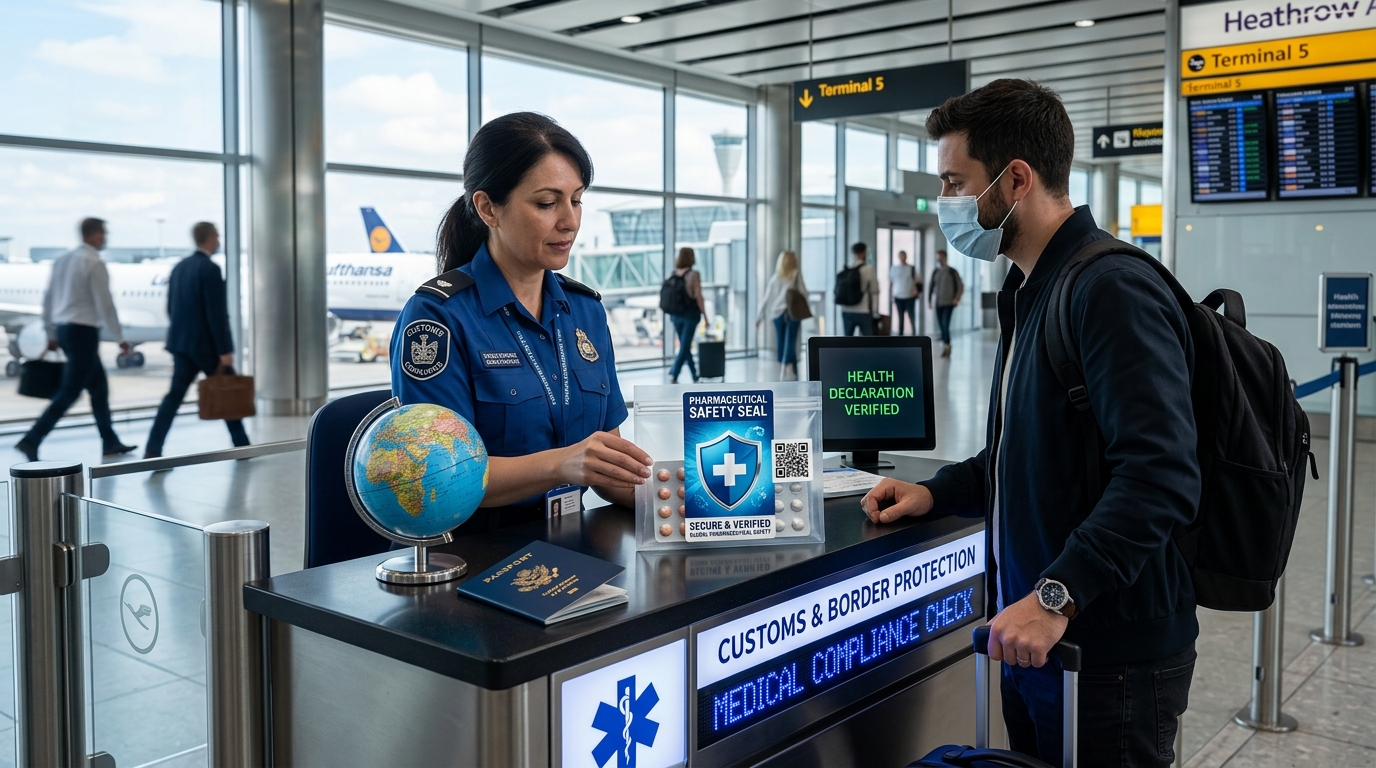
To ensure a seamless, stress-free transit through Suvarnabhumi Airport or other international checkpoints, travelers must proactively prepare an immutable, verifiable paper trail. Simply carrying a labeled prescription bottle or an unboxed vial in a toiletry bag is generally insufficient for crossing borders with controlled substances like anabolic steroids. The traveler must carry the medication in its original, factory-sealed packaging, ensuring that the pharmacy dispensation label—complete with the patient’s name and dosage instructions—is clearly attached, legible, and completely intact.
Furthermore, strictly adhering to the CDC guidelines for packing travel medications, patients must possess a formal medical certificate or a detailed, signed letter from their primary prescribing physician. This vital document should be written in clear English, typed on official hospital or clinic letterhead, and explicitly state several mandatory data points. It must include the patient’s full legal name exactly as it appears on their passport, their passport number, the specific medical diagnosis justifying the treatment (e.g., secondary hypogonadism or pituitary insufficiency), the precise pharmacological name and dosing schedule of the medication, and a definitive statement asserting the absolute medical necessity of continuing the therapeutic regimen while traveling abroad. Upon arrival, if selected for secondary screening or when proactively passing through the “Goods to Declare” (Red Channel), presenting this meticulously synchronized documentation will immediately demonstrate compliance and respect for Thai legislation, virtually eliminating the risk of confiscation.
Customs Declaration Warning: Never attempt to conceal injectable medications or needles in your luggage. Always pack medications in your carry-on bag to prevent loss, and be fully prepared to present your physical prescription and doctor’s letter to customs officials upon request. Transparency is your greatest legal protection when crossing international borders.
The Dangers of the Thai Black Market
Counterfeit Gear and Contaminated Vials
While the illicit allure of purchasing unprescribed, heavily discounted anabolics in local pharmacy back-alleys, underground gym locker rooms, or via unregulated social media vendors may tempt some uninformed visitors, the clinical and physiological risks of engaging with the black market are exceptionally profound. The explicit FDA warnings on bodybuilding products echo globally, and Thailand is absolutely not immune to the dangerous proliferation of counterfeit and substandard pharmaceuticals. Unregulated products, often manufactured in clandestine underground laboratories (UGLs) hidden in residential areas, completely bypass the stringent quality control, sterility, and efficacy protocols legally required for human-grade medicine.
Clinical evidence and independent laboratory mass spectrometry testing frequently suggest that a significant percentage of black-market vials are severely compromised. They are routinely under-dosed, completely devoid of the active hormone, or mislabeled entirely—for instance, substituting an expensive, raw compound like Primobolan or Anavar with a much cheaper, highly androgenic alternative like Testosterone Propionate or oral Winstrol. This biochemical deception ruins precise dosing protocols and sabotages physiological health.
More alarmingly, the complete lack of sterile manufacturing environments introduces catastrophic microbiological hazards. Vials formulated in UGLs can easily be contaminated with heavy metals from low-grade brewing equipment, endotoxins, pyrogens, and bacteria. Injecting these compromised solutions directly into muscle tissue can lead to localized sterile abscesses requiring surgical excision, necrotic tissue damage, or systemic, life-threatening sepsis. Furthermore, the industrial-grade carrier oils and raw solvents (such as high concentrations of benzyl alcohol or low-grade arachis oil) used in UGL products can trigger severe, immediate anaphylactic allergic reactions. Without pharmaceutical standardization, black-market users are exposing their endocrine, immune, and cardiovascular systems to unpredictable and potentially lethal physiological stress.
Legal Repercussions of Possession Without a Prescription
Beyond the catastrophic direct medical dangers, actively engaging with the Thai pharmaceutical black market carries incredibly heavy legal liabilities. Thailand possesses exceptionally strict laws regarding illicit drug use, possession, and distribution. While local law enforcement might superficially appear relaxed in specific tourist hotspots, the written legal code remains rigid, unforgiving, and is enforced without warning. If an individual is found in possession of anabolic steroids without a verifiable, legally obtained prescription matching their identity, they are subject to immediate prosecution under the Thai Drug Act.
The legal penalties for these infractions are not trivial inconveniences; they are life-altering events. Law enforcement operations periodically target gyms known for illicit distribution, intercept domestic mail packages, or perform random spot-checks on suspicious individuals. The consequences of being caught possessing unprescribed controlled substances include immediate arrest, prolonged pre-trial detention in notoriously harsh Thai correctional facilities, staggering financial penalties and legal fees, and eventual deportation. This is almost universally accompanied by a permanent, digitized ban on re-entering the kingdom. Navigating the complexities of the Thai judicial system as a foreign national facing drug-related charges is profoundly difficult, isolating, and expensive. The risk-to-reward ratio firmly dictates that all endocrine and medical treatments should be pursued exclusively through legitimate, board-certified, and legally transparent clinical channels.
How to Get Legal Hormone Therapy in Thailand
Consulting a Certified Endocrinologist
For individuals genuinely requiring physiological hormone optimization, or those experiencing the debilitating symptoms of clinical hypogonadism, navigating the legal healthcare system in Thailand is both safe, welcoming, and highly effective. The proper clinical process begins by proactively booking an appointment with a board-certified endocrinologist, a specialized urologist, or a recognized anti-aging medical specialist at a reputable hospital or a licensed medical clinic. Elite facilities such as Bumrungrad International Hospital, Samitivej Hospital, Bangkok Hospital, and various specialized wellness clinics across Bangkok, Chiang Mai, and Phuket operate at the highest international standards, frequently holding Joint Commission International (JCI) accreditation.
During the comprehensive initial consultation, the attending physician will meticulously evaluate the patient’s medical history, current symptomology (which may include chronic lethargy, loss of lean muscle mass, depressive psychological episodes, cognitive brain fog, or compromised libido), and thoroughly review the established Testosterone therapy benefits and risks. This clinical objectivity is crucial for ensuring that the proposed treatment directly aligns with the patient’s measurable physiological needs rather than aesthetic desires. The physician will provide a factual, evidence-based perspective on the therapeutic timeline, the pharmacokinetics of different testosterone esters, expected physiological outcomes, and potential side effects, ensuring complete informed consent before any pharmacological intervention is initiated.
Routine Blood Work and Health Monitoring
Legitimate, medically supervised hormone therapy is an entirely data-driven science. Before any prescription is formally issued or medication dispensed, the clinic will mandate a comprehensive serological analysis. This initial blood work goes far beyond a rudimentary check of total serum testosterone. The clinical panel typically assesses a complete blood count (CBC), detailed lipid profiles (HDL and LDL cholesterol ratios), liver enzymes (AST, ALT), kidney function markers (Creatinine, eGFR), prostate-specific antigen (PSA) to screen for benign prostatic hyperplasia or malignancy, and a full hormonal cascade including sensitive estradiol, prolactin, and comprehensive thyroid function (TSH, Free T3, Free T4).
Once the empirical data definitively confirms a clinical hormonal deficiency, the physician will prescribe pharmaceutical-grade testosterone. Depending on the patient’s physiology and preference, this may be administered via intramuscular or subcutaneous injection (using esters like Enanthate or Cypionate), transdermal application (gels or creams), or long-acting injections (such as Nebido). The medication is dispensed directly by the hospital pharmacy or a licensed partner facility, ensuring a completely unbroken chain of custody and absolute product sterility.
Crucially, ongoing medical supervision is a strict, non-negotiable aspect of this legal therapeutic process. Patients are required to undergo mandatory follow-up blood tests at predetermined intervals (usually every 3 to 6 months) to closely monitor critical biomarkers. Particular attention is paid to hematocrit levels—which can elevate significantly during TRT, increasing blood viscosity and cardiovascular risk—as well as ongoing prostate health and estrogen aromatization. This rigorous, highly clinical monitoring effectively mitigates the risks associated with hormone fluctuations, ensuring that the therapy remains both legally compliant under Thai law and optimally beneficial for the patient’s long-term physiology.
Frequently Asked Questions
Get our latest guides, news, and insights highlighted in your Google Search & AI Overviews.