Executive Summary: The debate over legalizing anabolic steroids is deeply polarized. Proponents of legalization argue from a standpoint of bodily autonomy and harm reduction, asserting that moving steroids from the black market into regulated pharmacies would prevent infections from contaminated gear and encourage doctor supervision. Opponents counter that steroids carry severe cardiovascular and hepatic risks, and legalizing them would fundamentally destroy the concept of fair play in sports, ultimately forcing even amateur athletes to use dangerous compounds just to remain competitive. While full legalization is highly unlikely, the rapid expansion of legal Testosterone Replacement Therapy (TRT) clinics is bridging the gap for older men.
The debate over performance-enhancing drugs is one of the most polarizing topics in modern sports and fitness. With millions of recreational lifters utilizing exogenous hormones, the question is increasingly shifting from “who is using?” to “should steroids be legal?” Proponents of legalization argue for bodily autonomy and harm reduction, pointing out that driving steroid use underground only makes it more dangerous. Opponents, however, highlight the severe long-term health risks and the destruction of fair play in athletic competition. Here is an objective, clinical breakdown of both sides of the steroid legalization debate.
The Current Legal Status of Anabolic Steroids
Schedule III Classification in the US
In the United States, anabolic steroids are classified as Schedule III controlled substances. This means that possession, use, or distribution without a valid medical prescription is a federal crime. This classification places them in the same legal category as ketamine and codeine-based painkillers.
The Anabolic Steroids Control Act of 1990
Steroids were not always treated this way. For decades, they were simply prescription drugs. However, following the highly publicized Ben Johnson doping scandal at the 1988 Olympics, Congress passed the Anabolic Steroids Control Act of 1990. This legislation fundamentally changed how the government viewed these hormones, shifting the focus from medical regulation to criminal prohibition in an effort to clean up professional sports.
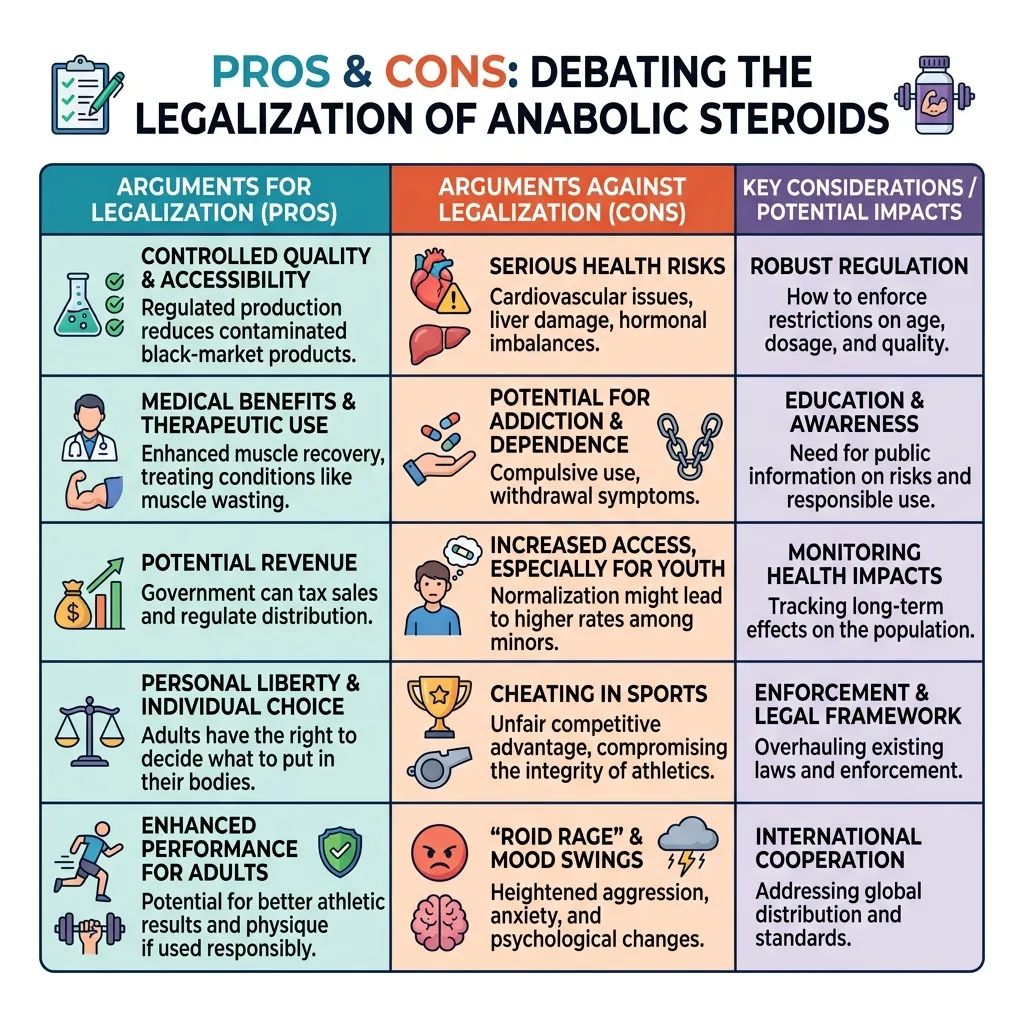
The Argument FOR Legalization
Bodily Autonomy and Personal Choice
The primary argument for legalizing anabolic steroids is rooted in libertarian philosophy and bodily autonomy. Proponents argue that adults have the right to choose what they put into their own bodies, especially if they are recreational bodybuilders not competing in drug-tested sports. They contend that the government should not criminalize individuals for wanting to alter their physical appearance or increase their strength.
Harm Reduction: Clean Gear and Doctor Supervision
From a medical standpoint, many argue for harm reduction. Because steroids are illegal, users are forced to buy “underground lab” (UGL) gear. These black-market products are frequently contaminated with heavy metals, improperly dosed, or brewed in unsterile conditions, leading to severe abscesses and infections. Legalization would allow users to purchase pharmaceutical-grade compounds and, critically, allow them to monitor their health via regular, stigma-free blood work with a physician.
The Hypocrisy of Alcohol and Tobacco Laws
Advocates often point to the legality of alcohol and tobacco. Both of these substances cause millions of deaths worldwide annually and have no physiological benefits. In contrast, while anabolic steroids carry risks, they do provide measurable physiological benefits (increased muscle mass, bone density, and recovery). Proponents argue it is hypocritical to criminalize a hormone while legally selling deadly carcinogens.
Arguments For Legalization
- Elimination of contaminated black-market products.
- Increased medical oversight and regular blood work.
- Respect for adult bodily autonomy.
- Reduces the stigma preventing users from seeking medical help.
Arguments Against Legalization
- Normalizes the use of dangerous drugs for aesthetic purposes.
- Forces all athletes to use PEDs to remain competitive.
- Severe long-term cardiovascular and liver damage.
- Inappropriate pressure on teenagers to use hormones.
The Argument AGAINST Legalization
Severe Cardiovascular and Hepatic Health Risks
The strongest argument against legalization is the undeniable physiological danger of supraphysiological hormone use. Chronic steroid abuse is inextricably linked to severe cardiovascular and hepatic health risks. Abuse leads to left ventricular hypertrophy (thickening of the heart wall), catastrophic alterations in cholesterol levels (crashing HDL), and severe liver toxicity, particularly with oral steroids. Medical professionals argue that legalizing these drugs would lead to a public health crisis.
The Destruction of Fair Play in Sports
In the realm of athletics, legalizing steroids would destroy the concept of a level playing field. If steroids were legal and permitted, athletic competition would no longer measure natural talent, discipline, and genetics; instead, it would become a contest of who responds best to chemical enhancement and who can afford the best pharmacological protocols.
Pressure on Youth Athletes
Opponents also point to the psychological impact on youth. If steroids were legalized and normalized in professional and amateur sports, high school athletes would feel immense, implicit pressure to use them to secure college scholarships or professional contracts, exposing developing endocrine systems to devastating, permanent damage.
The TRT Loophole: A Middle Ground?
The Rise of Anti-Aging Clinics
While full legalization remains highly unlikely, a middle ground has emerged: Testosterone Replacement Therapy (TRT). Over the last decade, thousands of “anti-aging” and men’s health clinics have opened across the country. These clinics legally prescribe testosterone to men who show clinical signs of hypogonadism.
Legal Testosterone Replacement vs. Blasting
TRT allows for the legal, medically supervised optimization of hormones. However, it is fundamentally different from a bodybuilding steroid cycle. TRT aims to return a man’s testosterone levels to a healthy baseline (e.g., 800 ng/dL), whereas a black-market steroid cycle aims to push levels to 3,000+ ng/dL using multiple, highly toxic compounds. TRT represents a safe, legal pathway for hormone management without opening the floodgates to widespread abuse.
Conclusion: Will the Laws Ever Change?
Should steroids be legal? The answer depends entirely on whether one prioritizes personal liberty and harm reduction over public health and competitive integrity. While the current political climate makes the decriminalization or full legalization of anabolic steroids highly improbable in the United States, the booming TRT industry indicates that society is becoming increasingly accepting of medical hormone optimization for aging men.
Get our latest guides, news, and insights highlighted in your Google Search & AI Overviews.