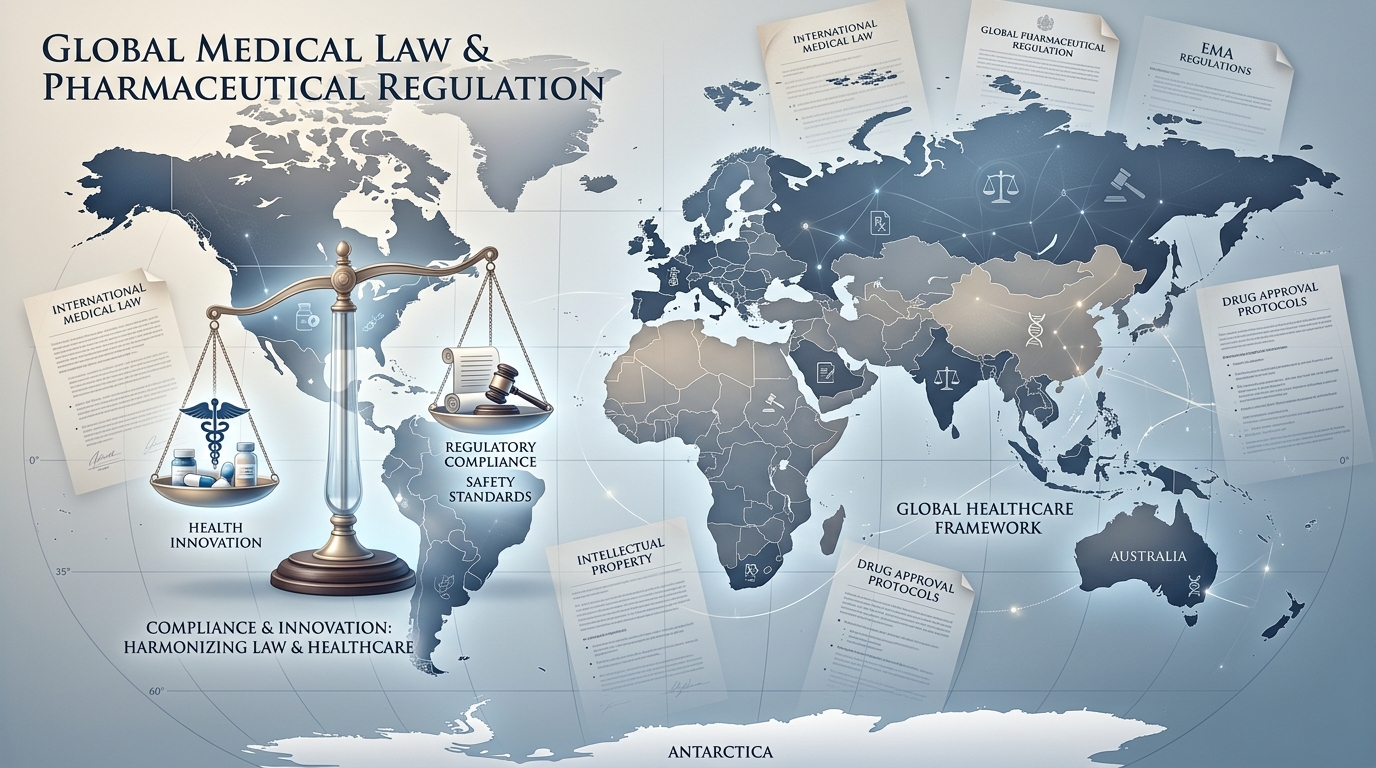
Walk into a pharmacy in Tijuana or Guadalajara and you might spot testosterone vials or Deca-Durabolin sitting right behind the counter — no prescription slip required, no questions asked. That scene has fueled a persistent myth: that anabolic steroids are essentially “legal and free” in Mexico. The reality is far more complicated. Mexico does classify anabolic steroids as prescription medications under federal health law, COFEPRIS enforcement is tightening, counterfeit products are rampant, and the moment you try to walk a vial across the U.S. border you are looking at federal drug charges. This guide cuts through the confusion with hard facts about Mexican drug scheduling, cross-border seizure risks, and what travelers actually need to know before making a costly mistake.
ⓘ Executive Summary: Key Legal Facts at a Glance
- Mexico: Anabolic steroids are classified as prescription-only medications under the Ley General de Salud; legal possession requires a valid receta médica.
- COFEPRIS (Mexico’s federal drug authority) governs approval, sale, and enforcement — but pharmacy-level compliance is inconsistent, especially in border towns.
- United States: Anabolic steroids are Schedule III controlled substances. Importing them across the U.S.–Mexico border without DEA authorization is a federal crime under 21 U.S.C. § 952.
- No personal-use exemption exists for Schedule III controlled substances at U.S. Customs — not even for TRT patients with a valid prescription.
- CBP penalties include cargo and vehicle seizure, civil fines, and criminal referral to federal prosecutors.
- Health risk: A significant proportion of steroids sold in unregulated Mexican markets are counterfeit, mislabeled, or bacterially contaminated.
Mexico’s Legal Framework for Anabolic Steroids
General Health Law (Ley General de Salud) and Drug Scheduling
Mexico’s primary legislative instrument governing pharmaceuticals is the Ley General de Salud (General Health Law), which establishes multi-tier drug classification based on abuse potential, medical utility, and risk to public health. Anabolic androgenic steroids (AAS) — including testosterone esters, nandrolone, stanozolol, oxandrolone, and boldenone — fall under the category of medications requiring a physician’s prescription (receta médica especial) for lawful dispensation. This classification places them in a regulatory tier comparable to certain sedative-hypnotics and narcotic analgesics in terms of documentation requirements.
Article 226 of the Ley General de Salud establishes six categories of prescription status, with anabolic steroids placed in a group requiring triplicate prescriptions in some Mexican states for verified distribution. The Library of Congress analysis of Mexico’s drug framework confirms that federal law does distinguish between authorized medical use and illicit distribution, with trafficking carrying substantially heavier sanctions than personal possession.
COFEPRIS: Mexico’s Drug Regulatory Authority
The Comisión Federal para la Protección contra Riesgos Sanitarios (COFEPRIS) serves as Mexico’s equivalent of the U.S. FDA. It is responsible for registering pharmaceutical products, authorizing manufacturing facilities, inspecting distribution chains, and sanctioning unauthorized sale of controlled medications. COFEPRIS maintains a national registry of approved pharmaceutical products; any steroid preparation sold outside that registry is, by definition, operating illegally under Mexican law.
COFEPRIS has the authority to issue actas de verificación (verification reports), levy fines, suspend operating licenses, and coordinate with federal police and the Attorney General’s office (Fiscalía General de la República) for criminal prosecution of trafficking-level violations. In recent years, COFEPRIS intensified coordination with the DEA and U.S. Customs and Border Protection on cross-border pharmaceutical trafficking cases, reflecting tightening bilateral enforcement.
Prescription Requirements vs. Real-World Pharmacy Practice
There is a documented gap between statutory law and pharmacy-level practice in Mexico, particularly in high-volume tourist corridors and border municipalities. While the Ley General de Salud mandates that a physician’s prescription accompany any dispensation of anabolic steroids, some pharmacies in Tijuana, Nogales, Ciudad Juárez, and other border towns have historically dispensed these substances without verifying — or even requesting — a prescription. This practice is illegal under Mexican federal law, but inconsistent COFEPRIS field inspection resources have historically allowed it to persist in certain areas.
It is critical to understand that the existence of this de facto laxity does not confer legal status. A traveler who purchases steroids without a prescription from a non-compliant Mexican pharmacy is participating in an illegal transaction under Mexican law, and the products obtained carry no regulatory assurance of identity, potency, or sterility.
The “Over-the-Counter” Myth: What Really Happens at Mexican Pharmacies

Border Town Pharmacies vs. Regulated Farmacias
A meaningful distinction exists between the large, regulated pharmacy chains (Farmacias del Ahorro, Farmacia Guadalajara, Benavides) that operate with rigorous compliance programs and the smaller independent operations that cluster around border crossings and tourist zones. Major chains typically require valid prescriptions for controlled medications and maintain electronic dispensation logs that COFEPRIS can audit. The informal border-town operations that have garnered media attention are a different category entirely — operating in a legal gray zone that depends on minimal inspection frequency rather than any lawful authorization.
Travelers should not interpret observing an informal sale as evidence that such a sale is legally sanctioned. The legal status of anabolic steroids in Mexico is defined by the Ley General de Salud, not by the behavior of non-compliant retailers.
Why Some Pharmacies Sell Without a Prescription — and the Risks
The economic incentives for informal border pharmacies are substantial. American fitness tourists willing to pay cash for injectable testosterone or Deca-Durabolin represent a significant revenue stream. Some operations employ informal “prescription writing” arrangements with unlicensed practitioners operating adjacent to the pharmacy — a practice that constitutes fraud under both Mexican and U.S. law. The prescription produced in such transactions is not valid under COFEPRIS standards and would provide no legal protection for the purchaser at a U.S. port of entry.
Beyond the legal dimension, the economic incentive to serve this market has attracted suppliers with no interest in pharmaceutical quality. Investigations have documented that border-area steroid products frequently contain incorrect active compounds, bacterial contamination due to non-sterile compounding, or — in the most severe documented cases — fentanyl and other adulterants, reflecting the same contamination risks present in the broader unregulated drug market.
Counterfeit and Contaminated Steroid Products in Mexico
Pharmaceutical counterfeiting is a documented and serious problem throughout the Mexican unregulated drug supply chain. Products bearing recognizable brand names — including legacy preparations such as Organon’s Deca-Durabolin, Schering’s Primobolan, or various testosterone enanthate formulations — are among the most widely counterfeited items in the underground market. Analysis of seized products has found: incorrect active pharmaceutical ingredients, dosing errors of 50–300% above or below labeled concentrations, lack of sterile filtration resulting in particulate matter and bacterial endotoxins, and the complete absence of the labeled compound replaced with plant-based oils or saline.
The National Institute on Drug Abuse (NIDA) has documented the health consequences of contaminated and counterfeit injectable compounds, including systemic infections, abscesses, septicemia, and endocarditis from bacterially contaminated preparations. These risks are not theoretical — they represent real clinical outcomes from use of unregulated products.
Are Steroids Legally Available in Mexico? The Medical vs. Black Market Distinction
Legitimate Medical Use Cases in Mexico
Within the Mexican medical system, anabolic steroids do have recognized clinical applications that are covered under valid prescription authorization. Endocrinologists treating male hypogonadism (testosterone deficiency) may prescribe testosterone replacement preparations through legitimate pharmacy channels. Oncologists and infectious disease specialists may prescribe anabolic agents for patients experiencing cachexia associated with malignancy or HIV/AIDS-related wasting syndrome. Pediatric endocrinologists may use low-dose testosterone in boys with documented constitutional delay of puberty under closely supervised protocols.
In all legitimate medical use cases, the dispensation occurs within the regulated healthcare system, with prescriptions traceable to licensed Mexican physicians, dispensed by COFEPRIS-registered pharmacies, using products from COFEPRIS-registered manufacturers. This pathway bears no resemblance to the cash-and-carry transactions at border pharmacies that target foreign fitness tourists.
Underground Labs and the Gray Market in Mexico
Mexico hosts a substantial underground laboratory (UGL) sector that manufactures anabolic steroid preparations outside any regulatory framework. These operations produce products under invented brand names (often designed to mimic discontinued legitimate brands), print professional-looking labels, and distribute through gym networks, online vendors, and complicit border pharmacies. Purchasing from any unregistered source is illegal under Mexican law — even if the buyer is a Mexican national and even if the transaction occurs within Mexico’s borders.
The proliferation of UGL products further complicates any quality or safety assumption a buyer might make. Unlike compounding pharmacies operating under regulatory oversight, UGLs have no quality assurance infrastructure, no batch testing requirements, no sterility validation, and no regulatory accountability. The risk profile of products from these sources is categorically different from regulated pharmaceutical manufacturing.
| Category | Legal Status in Mexico | Legal Status in USA | Notes |
|---|---|---|---|
| Anabolic steroids with valid Mexican Rx | ✓ Legal in Mexico | ✗ Federal crime to import | A Mexican prescription does not authorize U.S. importation |
| Steroids purchased without prescription | ✗ Illegal under Mexican law | ✗ Federal crime to import | Illegal at point of purchase AND importation |
| Testosterone for TRT (with US Rx) | ⚠ Requires Mexican Rx for purchase | ✗ Cannot import without DEA authorization | U.S. TRT prescriptions have no cross-border import exemption |
| Underground lab (UGL) products | ✗ Illegal in Mexico | ✗ Illegal in USA | No regulatory standing in either jurisdiction |
| COFEPRIS-registered steroids (prescribed, in-country use) | ✓ Legal with valid Rx | N/A — consumption within Mexico only | Legal only for the Mexican patient in Mexico |
US Law: Why Bringing Steroids Across the Mexico Border Is a Federal Crime
Transporting any quantity of anabolic steroids across the U.S.–Mexico border without DEA authorization is a federal felony under 21 U.S.C. § 952. There is no personal-use exemption, no TRT exception, and no threshold below which the offense is treated as a civil matter. Consequences include criminal prosecution, mandatory minimum sentences in trafficking-quantity cases, vehicle seizure, and permanent federal criminal record.
Anabolic Steroid Control Acts of 1990 and 2004
The legislative history of anabolic steroid scheduling in the United States begins with the Anabolic Steroid Control Act of 1990, enacted in response to documented abuse in professional sports and concerns about distribution to minors. That legislation amended the Controlled Substances Act (CSA) to schedule anabolic steroids as Schedule III controlled substances — placing them in the same regulatory tier as ketamine and some barbiturate formulations, below Schedule I and II but well above non-controlled prescription medications.
The Anabolic Steroid Control Act of 2004 substantially expanded the list of scheduled compounds, adding dozens of designer steroids and prohormone precursors that had been marketed as dietary supplements in the years following the 1990 Act. This expansion closed regulatory loopholes that manufacturers had been exploiting and significantly broadened the scope of what constitutes a scheduled anabolic steroid under U.S. law. The 2004 amendments made clear that scheduling would extend to new chemical entities that were structurally or pharmacologically related to existing Schedule III anabolic steroids.
Schedule III Classification Under the Controlled Substances Act
Under the DEA’s drug scheduling framework, Schedule III substances are defined as drugs with moderate to low potential for dependence and accepted medical use in the United States, but subject to criminal sanctions for unauthorized possession, distribution, or importation. For anabolic steroids specifically, Schedule III possession without a valid U.S. prescription carries penalties of up to one year imprisonment and/or fines for a first offense; distribution or trafficking-level offenses carry up to five years imprisonment for a first offense and ten years for subsequent offenses.
The Schedule III designation means that any anabolic steroid — regardless of whether it was legally purchased in Mexico, regardless of the quantity carried, and regardless of whether the traveler holds a foreign prescription — is subject to the full force of federal controlled substance law the moment it crosses into U.S. jurisdiction or is presented to a U.S. Customs officer at a port of entry.
21 U.S.C. § 952: Importation Prohibition Explained
The specific federal statute governing importation is 21 U.S.C. § 952, which prohibits the importation of any Schedule I or Schedule II substance and requires DEA authorization for importation of Schedule III, IV, and V substances. For an individual traveler, DEA import authorization for personal quantities of a Schedule III controlled substance is not a standard or routinely available process. There is no equivalent to the FDA’s personal importation policy for controlled substances — the DEA authorization pathway exists for licensed pharmaceutical manufacturers and researchers, not for consumers transporting personal supplies across an international border.
Practically, this means that a traveler who purchases testosterone legally in Mexico under a valid Mexican prescription and attempts to bring it into the U.S. for personal TRT use is committing a federal violation of 21 U.S.C. § 952. The legality of the original Mexican purchase is immaterial to the federal importation charge.
US Customs and Border Protection (CBP): What Happens at the Crossing
How CBP Detects Steroid Smuggling
U.S. Customs and Border Protection employs multiple detection methodologies at all ports of entry. Primary inspection includes officer interaction and declaration review; secondary inspection involves physical search of luggage, person, and vehicle. Technological tools include X-ray and CT imaging of baggage and vehicle cargo areas, ion mobility spectrometry for trace chemical detection, and narcotics detection canines that are responsive to a range of controlled compounds including anabolic steroid preparations. High-throughput border crossings such as San Ysidro (Tijuana), Otay Mesa, and El Paso operate with overlapping detection systems that make consistent evasion statistically unlikely over multiple crossings.
CBP officers are specifically trained to recognize pharmaceutical packaging commonly associated with Mexican-sourced steroid products, including multi-dose amber glass vials with handwritten or laser-printed labels, blister-pack oral tablet formulations bearing unfamiliar brand names, and multi-vial “kits” consistent with injectable cycle protocols.
Penalties for Getting Caught: Seizure, Fines, and Prosecution
The consequences of CBP discovery of anabolic steroids depend on quantity, criminal history, and CBP’s assessment of intent. For small personal-use quantities, typical outcomes include product seizure and issuance of a monetary penalty notice; the traveler is not necessarily arrested but receives a civil penalty and may be referred for follow-up. For larger quantities or repeat offenses, CBP will refer the case to Immigration and Customs Enforcement — Homeland Security Investigations (ICE-HSI) for criminal prosecution under 21 U.S.C. § 952.
Federal sentencing for importation violations depends on drug quantity (measured in grams of the controlled substance), prior criminal history under U.S. Sentencing Guidelines, and whether the offense involved distribution or was limited to personal use. Even modest quantities of multiple anabolic steroid compounds — for example, a 10-week cycle supply of testosterone and nandrolone — can aggregate to quantities triggering mandatory minimum sentencing thresholds in trafficking cases.
Vehicle and Asset Seizure at the Border
CBP has statutory authority under the Comprehensive Crime Control Act and the Controlled Substances Import and Export Act to seize vehicles used to transport controlled substances, including anabolic steroids. Vehicle seizure is not reserved for large-scale trafficking operations; it can be applied whenever a vehicle is found to contain a controlled substance at a port of entry. Civil asset forfeiture proceedings for a vehicle can proceed independently of — and even in the absence of — a criminal prosecution, meaning a traveler whose charges are ultimately dismissed may still lose their vehicle through the administrative forfeiture process.
The economic calculus for a traveler considering bringing Mexican-purchased steroids across the border is therefore not simply the street value of the product versus the risk of a small fine. It includes the potential loss of a vehicle worth tens of thousands of dollars, criminal defense legal fees, possible criminal record, and sentence exposure that can include federal imprisonment.
| Violation Category | Governing Statute | Typical Penalty Range | Asset Exposure |
|---|---|---|---|
| Personal-quantity importation (first offense) | 21 U.S.C. § 952 | Civil fine; possible up to 1 yr imprisonment | Seizure of product; possible vehicle seizure |
| Personal-quantity importation (repeat offense) | 21 U.S.C. § 952 + CSA § 844 | Up to 2 years imprisonment; enhanced fines | Product + vehicle seizure; civil forfeiture |
| Distribution-quantity importation | 21 U.S.C. § 952 + § 841 | 5–10 years imprisonment (first offense) | Full asset forfeiture; vehicle, cash, property |
| Failure to declare controlled substance | 19 U.S.C. § 1497 | Civil penalty up to $10,000 per violation | Forfeiture of undeclared item |
| Trafficking-level importation (ICE-HSI referral) | 21 U.S.C. § 963 (conspiracy) | 10–20+ years federal imprisonment | Total asset forfeiture |
FDA’s Stance on Importing Prescription Drugs from Mexico
Personal Importation Policy — Does It Apply to Steroids?
The FDA’s guidance on importing prescription drugs for personal use outlines a narrow set of circumstances under which FDA field officers may exercise enforcement discretion for certain unapproved foreign pharmaceuticals — for example, a medication not available in the U.S. that a patient is using for a serious condition. This policy is frequently misunderstood and misapplied. It does not apply to controlled substances. It does not override the DEA’s Schedule III importation prohibition. It creates no legal right to import any drug; it reflects only enforcement discretion for a narrow category of non-controlled medications.
Anabolic steroids — as Schedule III controlled substances — fall entirely outside the scope of any personal importation enforcement discretion. FDA’s Import Alert 66-57, which governs unapproved new drugs imported by mail or express carrier, similarly provides no protection for controlled substances, which are handled under separate DEA authority regardless of whether they arrive by mail, courier, or are carried by a traveler in person.
FDA Import Alerts and Non-Approved Drugs
Any anabolic steroid formulation purchased in Mexico that is not FDA-approved for use in the United States — which includes the vast majority of Mexican-market products, particularly UGL preparations — is by definition an unapproved new drug under the Federal Food, Drug, and Cosmetic Act (FD&C Act). FDA has no mechanism to verify the safety, purity, or identity of such products. There is no regulatory backstop protecting a consumer who purchases an anabolic steroid from a Mexican pharmacy, regardless of the pharmacy’s apparent legitimacy or the professional appearance of the product packaging.
Health Risks of Buying Steroids from Unregulated Mexican Sources
Counterfeit Products: What You’re Really Getting
The U.S. National Library of Medicine’s MedlinePlus resource on anabolic steroids notes that many products sold as anabolic steroids may contain undisclosed substances or incorrect amounts of the labeled compound. In the context of Mexican unregulated markets, documented findings from product seizure and independent testing include: substitution of testosterone with equipoise (boldenone undecylenate) or vice versa, dramatically incorrect concentrations, presence of residual solvents from non-pharmaceutical-grade manufacturing processes, and bacterial contamination measurable in standard sterility testing.
For injectable compounds specifically, any deviation from pharmaceutical-grade sterile manufacturing standards poses direct risks of injection-site abscess, systemic bacteremia, and in severe cases, bacterial endocarditis — a life-threatening infection of the heart’s inner lining. These outcomes have been documented in emergency medicine literature associated with use of compounded injectable hormones from unregulated sources.
Documented Health Consequences of Unregulated Steroid Use
Beyond the risks specific to unregulated sourcing, the established pharmacological risk profile of anabolic steroids themselves warrants clinical consideration. Research cited by the National Institute on Drug Abuse documents the following adverse effects associated with non-medical anabolic steroid use:
- Cardiovascular: Dyslipidemia (suppression of HDL, elevation of LDL), left ventricular hypertrophy, increased arterial stiffness, elevated risk of myocardial infarction and stroke, particularly in users with pre-existing cardiovascular risk factors.
- Hepatic: Cholestatic jaundice, peliosis hepatis (blood-filled cysts in liver parenchyma), and elevated hepatic enzymes — particularly pronounced with 17-alpha-alkylated oral compounds.
- Endocrine: Suppression of the hypothalamic-pituitary-gonadal (HPG) axis, resulting in testicular atrophy, azoospermia, and potentially prolonged or permanent hypogonadism following cessation of use.
- Dermatological: Severe cystic acne, accelerated androgenic alopecia, and striae (stretch marks) from rapid muscle hypertrophy.
- Psychiatric: Hypomania and aggression during use (“roid rage”), major depressive episodes and anhedonia during post-cycle periods linked to suppressed endogenous testosterone production, and documented cases of dependence characterized by withdrawal-driven reinitiation of use.
- Reproductive: Gynecomastia from aromatization to estradiol, feminizing effects, and in females, virilization (deepening voice, clitoral enlargement, menstrual disruption).
These risks are compounded — not merely additive — when the product being administered is of unknown identity or potency, as is the case with unregulated Mexican market sources.
Are Anabolic Steroids Legal in Mexico? COFEPRIS & Pharmacy Realities
For North American fitness travelers visiting resort destinations like Cancun, Cabo, or border towns like Tijuana, the question frequently arises: are anabolic steroids legal in mexico? Mexico’s pharmaceutical regulatory framework differs substantially from the United States, creating unique legal distinctions between domestic purchase and cross-border transport.
Under Mexico’s General Health Law and regulations enforced by COFEPRIS (Federal Committee for the Protection from Sanitary Risks), many pharmaceutical preparations that require strict DEA Schedule III prescriptions in the US are classified as standard pharmacy items or over-the-counter wellness products.
Veterinary vs. Human Pharmacy Availability & Border Cross-Inspection Risks
- Human-Grade Farmacias: Retail pharmacies in Mexico routinely stock pharmaceutical hormone preparations—such as Sustanon 250, Primobolan Depot, and Testosterone Enanthate—which can often be purchased without a domestic prescription.
- Veterinary Distribution (Veterinarias): Heavy veterinary compounds like Equipoise (Boldenone) and Trenbolone Acetate (Finaplix derivatives) are legally sold through agricultural supply stores across Mexico.
- US Border Enforcement: Under US federal law, bringing any quantity of anabolic steroids across international checkpoints (land borders or international airports) constitutes illegal smuggling, leading to immediate felony charges, confiscation, and severe criminal fines.
Frequently Asked Questions About Steroids and Mexican Law
No. Under Mexico’s Ley General de Salud, anabolic steroids are classified as prescription-only medications requiring a valid receta médica for lawful purchase. Some non-compliant border pharmacies may sell them without verifying a prescription, but this practice is illegal under Mexican federal law and provides the buyer with no legal protection.
No. Anabolic steroids are Schedule III controlled substances under the U.S. Controlled Substances Act. Importing them across the U.S.–Mexico border without DEA authorization violates 21 U.S.C. § 952 and is a federal crime. There is no personal-use exemption, no threshold quantity below which possession is decriminalized at the border, and no TRT exception.
CBP will seize the product and may issue a civil monetary penalty notice. Depending on the quantity, criminal history, and officer assessment, you may be detained, your vehicle may be seized, and the case may be referred to ICE-HSI for federal criminal prosecution. Even a first-time incident with small quantities creates a permanent record in CBP’s enforcement database that affects future border crossings.
No. Testosterone is a Schedule III controlled substance under the CSA regardless of its therapeutic indication. A valid U.S. prescription for TRT testosterone does not authorize importation from a foreign country without DEA authorization. CBP and the DEA do not make a clinical distinction between testosterone prescribed for TRT and testosterone purchased for non-medical use at the point of border enforcement.
Some non-compliant pharmacies in border areas have historically dispensed anabolic steroids without verifying prescriptions. This conduct is illegal under Mexican law. Major regulated pharmacy chains in Mexico do require prescriptions. The informal practices of non-compliant retailers do not reflect the legal status of these medications under Mexican federal law.
Penalties under 21 U.S.C. § 952 range from civil fines and product seizure for small quantities to federal imprisonment of up to 10 years for distribution-level importation. Vehicle seizure through civil asset forfeiture is an additional risk. Repeat offenses carry enhanced sentencing. All importation violations are federal matters handled in U.S. District Court.
Legacy pharmaceutical brand-name steroids — including Deca-Durabolin and Primobolan — are among the most widely counterfeited products in the Mexican unregulated steroid market. Even products bearing professional-looking labels and packaging may contain incorrect compounds, wrong dosages, bacterial contamination, or no active ingredient at all. Without COFEPRIS-verified chain-of-custody documentation, there is no reliable way for a consumer to authenticate these products at a pharmacy counter.
The factual picture of anabolic steroid legality in Mexico and at the U.S.–Mexico border is consistent and unambiguous when viewed through the lens of the applicable statutes: prescription-only classification under Mexican federal law, Schedule III status under the U.S. Controlled Substances Act, and a categorical federal prohibition on importation under 21 U.S.C. § 952. The informal practices of non-compliant border pharmacies create a false impression of legal accessibility that has real and serious consequences for travelers who act on it. Any individual considering the purchase or transport of anabolic steroids across this border should consult qualified legal counsel and review the official guidance from the Drug Enforcement Administration, U.S. Customs and Border Protection, and the U.S. Food and Drug Administration before taking any action.
Get our latest guides, news, and insights highlighted in your Google Search & AI Overviews.