Executive Summary: The most physiologically demanding part of an anabolic steroid cycle isn’t the cycle itself; it is the aftermath. When a user stops taking synthetic steroids, their body experiences a severe hormonal crash. Because the brain detected massive amounts of exogenous testosterone during the cycle, it completely shut down the body’s natural production. Consequently, upon cessation, the user’s natural testosterone levels plummet to zero. This triggers brutal withdrawal symptoms, including rapid muscle catabolism, profound depression, lethargy, and total loss of libido. To mitigate this crash, bodybuilders rely on Post-Cycle Therapy (PCT) drugs to force their endocrine system to restart, though full recovery is never guaranteed.
Starting an anabolic steroid cycle is easy; the exogenous hormones flood your system, strength skyrockets, and recovery feels instantaneous. But every cycle must eventually come to an end. The true test of a user’s physical and mental resilience begins the day after their last injection. So, what happens when you stop taking steroids? The answer involves a complex and often brutal physiological crash. Because your body has recognized the massive influx of synthetic hormones, it has completely shut down its own natural testosterone production. Here is a clinical look at the harsh realities of steroid withdrawal, the loss of muscle mass, and the critical importance of Post-Cycle Therapy (PCT).
The Physiology of the Crash
The HPTA Shutdown Explained
To understand the steroid crash, you must understand the Hypothalamic-Pituitary-Testicular Axis (HPTA). Under normal circumstances, the hypothalamus in your brain monitors testosterone levels. When levels are low, it signals the pituitary gland to release Luteinizing Hormone (LH) and Follicle-Stimulating Hormone (FSH), which travel to the testes and instruct them to produce natural testosterone.
Zero Natural Testosterone
When you inject anabolic steroids, your testosterone levels jump to 3, 4, or 5 times the natural limit. The hypothalamus detects this massive surplus and immediately shuts off the release of LH and FSH. Your testes, receiving no signal to work, shrink (atrophy) and stop producing testosterone. This is known as HPTA shutdown. When the cycle ends and the synthetic steroids clear your system, your natural production remains “turned off.” You are left with virtually zero testosterone.
Physical Symptoms of Steroid Withdrawal
Rapid Muscle Loss (Catabolism)
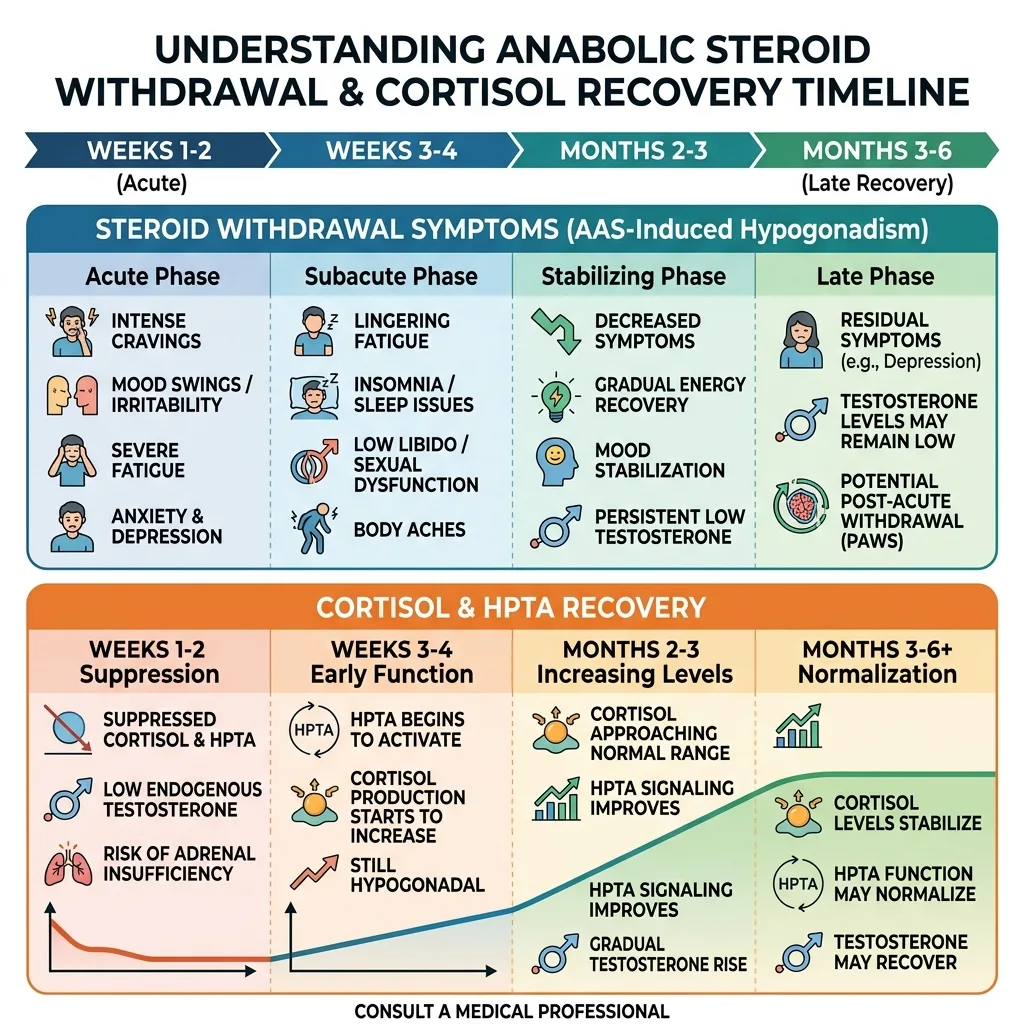
Testosterone is highly anabolic (muscle-building) and anti-catabolic (prevents muscle breakdown). Without it, the body enters a highly catabolic state. The stress hormone cortisol takes over, aggressively stripping away the muscle mass the user just spent months building. Without intervention, a user can lose the majority of their cycle gains in a matter of weeks.
Lethargy and Loss of Libido
Testosterone dictates male energy levels and sexual function. With levels near zero, the user will experience crushing, debilitating lethargy. Simple workouts feel impossible. Furthermore, sexual desire vanishes entirely, and erectile dysfunction is practically guaranteed during the darkest weeks of the crash.
During the Cycle (High Hormones)
- Massive strength and muscle gains.
- Incredible energy and fast recovery.
- Elevated mood and heightened libido.
The Post-Cycle Crash (Zero Hormones)
- Rapid muscle catabolism and fat gain.
- Severe lethargy and erectile dysfunction.
- Profound clinical depression and anxiety.
The Psychological Toll of Coming Off
Severe Depression and Anxiety
The physical symptoms are miserable, but the psychological symptoms are often dangerous. Testosterone plays a massive role in dopamine regulation and mood stabilization. The sudden plunge to zero frequently triggers profound clinical depression. Many former users report feeling a sense of overwhelming hopelessness, anxiety, and panic attacks during the withdrawal phase.
Body Dysmorphia (“Bigorexia”)
Compounding the chemical depression is severe body dysmorphia. A bodybuilder who felt like a superhuman on cycle now has to watch their physique rapidly deflate and soften in the mirror every single day. This intense psychological distress is the primary reason why steroid addiction occurs; users cannot handle the withdrawal and jump right back on another cycle to feel “normal” again.
Post-Cycle Therapy (PCT): Restarting the Engine
SERMs (Clomid and Nolvadex)
To survive the crash and preserve their muscle, intelligent users do not simply “quit cold turkey.” They utilize a pharmaceutical protocol known as Post-Cycle Therapy (PCT). The backbone of PCT relies on Selective Estrogen Receptor Modulators (SERMs), primarily Clomid (Clomiphene) and Nolvadex (Tamoxifen). These drugs trick the pituitary gland into thinking the body has zero estrogen, forcing it to violently pump out LH and FSH, which shocks the testes back into producing testosterone.
HCG (Human Chorionic Gonadotropin)
Many advanced users will also use HCG (Human Chorionic Gonadotropin) in the final weeks of their cycle. HCG mimics LH directly, forcing the testes to remain active and full-sized even while the brain is shut down, making the eventual transition to SERMs much smoother.
Medical Warning: PCT drugs like Clomid are powerful fertility medications that come with their own severe side effects, including permanent vision damage (floaters) and extreme mood swings. They are not harmless supplements.
Long-Term Consequences of Abuse
Hypogonadism and TRT for Life
The dark reality of anabolic steroids is that Post-Cycle Therapy is never guaranteed to work. The human endocrine system is fragile. If a user abuses heavy dosages of highly suppressive compounds (like Trenbolone or Nandrolone) for years without adequate time off, their HPTA may suffer permanent damage.
Permanent Endocrine Damage
When the axis breaks permanently, the user is diagnosed with Anabolic Steroid-Induced Hypogonadism (ASIH). They will never naturally produce normal levels of testosterone again. At this point, the only medical solution is to be prescribed legal Testosterone Replacement Therapy (TRT)—relying on weekly injections just to maintain basic health and normal function for the rest of their lives.
Get our latest guides, news, and insights highlighted in your Google Search & AI Overviews.