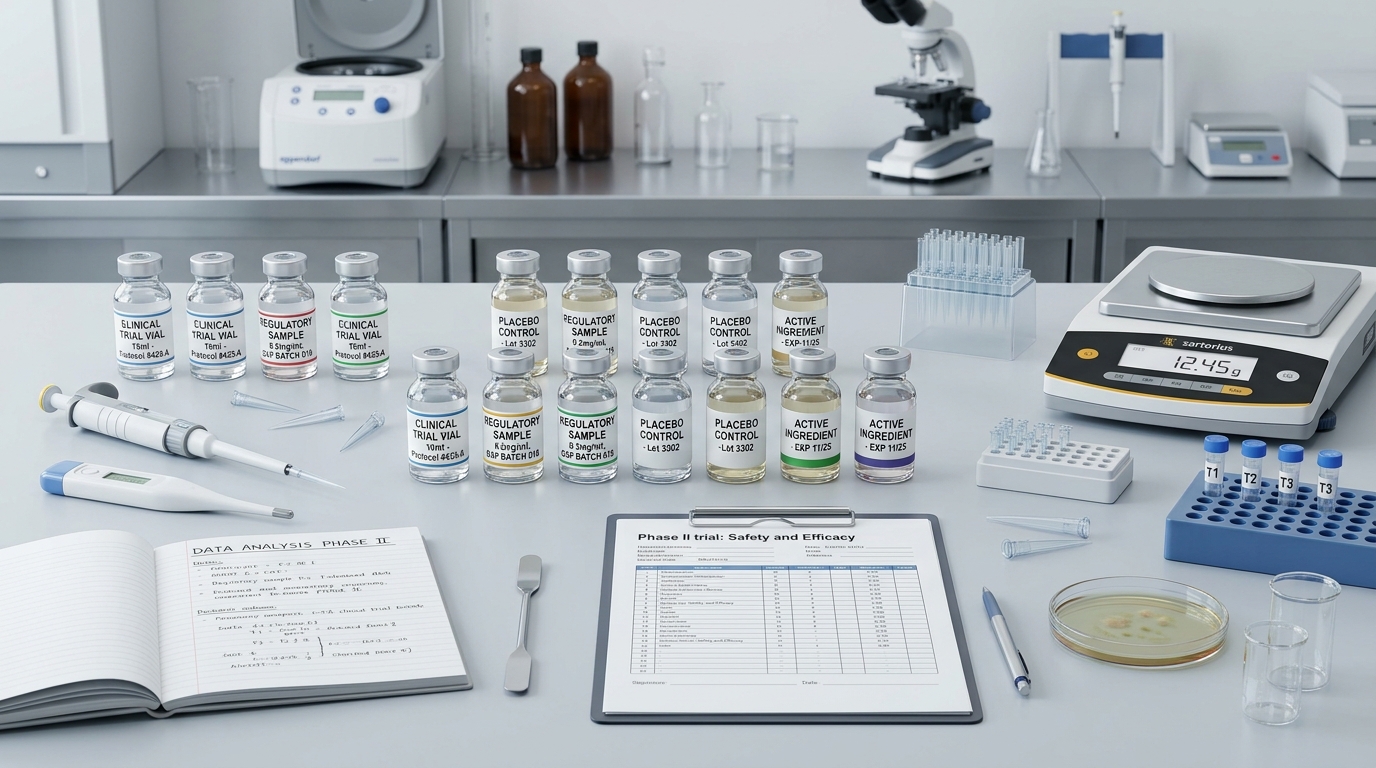
Whether you are facing an upcoming workplace screening, an athletic drug test, or simply curious about the science, you are likely wondering: what do steroids show up as on a drug test? Standard urine panels look for recreational drugs, but detecting anabolic steroids requires highly specialized laboratory protocols. From the Testosterone to Epitestosterone (T/E) ratio to advanced Isotope Ratio Mass Spectrometry, uncovering performance-enhancing drugs is a scientific arms race. In this detection guide, we break down exactly how modern anti-doping tests work, the difference between standard and specialized panels, and the average detection windows for the most common anabolic compounds.
The conversation around anabolic-androgenic steroids (AAS) has grown tremendously, making it vital to understand the facts regarding detection, testing protocols, and biological half-lives. As testing technology evolves, the window for athletes or individuals to conceal exogenous hormone use becomes increasingly narrow. Understanding what happens behind the scenes in clinical laboratories sheds light on the intricacies of metabolic testing and the limitations of general drug screening procedures.
Introduction to Steroids and Drug Testing
When discussing what steroids show up as on a drug test, it is crucial to first distinguish between the types of tests administered by different organizations. Many individuals mistakenly believe that any urine sample given to an employer or law enforcement agency will automatically screen for performance-enhancing drugs. In reality, testing for anabolic steroids is a highly specific, complex, and expensive process. General testing protocols are designed primarily to detect substances of abuse that impair immediate cognitive and motor function, rather than long-term metabolic enhancements.
Standard 12-Panel vs. Specialized Steroid Tests
Most occupational health screens rely on the standard guidelines established by the Substance Abuse and Mental Health Services Administration (SAMHSA). The typical 5-panel or 12-panel urine screen tests for substances such as THC (marijuana), cocaine, amphetamines, opiates, phencyclidine (PCP), benzodiazepines, and barbiturates. If you are taking a routine employment drug test, the laboratory is searching for the specific metabolites of these recreational and prescription drugs. Anabolic steroids do not share the same molecular structure or metabolic pathways as these substances, meaning they will not trigger a positive result on a standard panel.
In contrast, detecting exogenous hormones requires specialized anabolic steroid drug testing panels. These panels must be explicitly ordered by the testing entity. Steroid panels are meticulously calibrated to identify dozens of different anabolic-androgenic compounds, including Nandrolone, Stanozolol, Trenbolone, and Methandrostenolone, alongside their respective metabolites. Because the equipment required to run these specialized panels is advanced, the cost per test is significantly higher than a standard workplace screen.
Why Employers and Sports Agencies Test Differently
Employers generally utilize standard drug testing to ensure workplace safety and mitigate liability. Their primary concern is whether an employee is intoxicated on the job, which could lead to accidents or impaired decision-making. Testing for performance-enhancing drugs is rarely a priority in the corporate sector unless the profession specifically mandates physical readiness or involves strict regulatory compliance, such as in law enforcement or certain military branches. You can read more about standard workplace drug testing guidelines to understand the scope of corporate screening.
Sports agencies, such as the World Anti-Doping Agency (WADA) or the United States Anti-Doping Agency (USADA), operate under an entirely different mandate. Their objective is to preserve the integrity of athletic competition and ensure a level playing field. Consequently, their testing protocols are aggressively targeted at detecting anabolic steroids, peptide hormones, growth factors, and masking agents. For an athlete, a drug test is almost always a specialized screen designed to catch even trace amounts of exogenous substances months after the initial administration.
What Do Steroids Show Up As? The Science of Detection

To accurately answer what steroids show up as on a drug test, one must look at human metabolism. When you ingest or inject an anabolic steroid, your body immediately begins to break it down. The liver alters the chemical structure of the drug to make it more water-soluble, allowing it to be excreted through urine. Therefore, laboratory tests rarely detect the parent compound itself; instead, they detect the distinct metabolic byproducts—referred to as metabolites—left behind in the urine.
Detecting Testosterone and the T/E Ratio
One of the most complex challenges in anti-doping is detecting the use of exogenous testosterone. Because the human body naturally produces testosterone, simply finding the hormone in a urine sample does not prove an athlete has doped. To solve this, scientists rely on the Testosterone/Epitestosterone (T/E) ratio.
In a healthy, natural male, the ratio of testosterone to epitestosterone (an inactive epimer of testosterone) in the urine is typically around 1:1. When an individual injects synthetic testosterone, their urinary testosterone levels skyrocket, but their epitestosterone levels remain stable or decrease due to the suppression of natural endocrine function. WADA currently sets the threshold for suspicion at a T/E ratio of 4:1. If a urine sample exceeds this ratio, it triggers further, more rigorous testing to confirm the presence of synthetic hormones.
Identifying Synthetic Steroid Metabolites
While testosterone requires a ratio-based approach, synthetic designer steroids (such as Trenbolone, Winstrol, or Dianabol) do not exist naturally in the human body. The presence of these compounds, or their specific metabolites, is absolute proof of doping. Laboratories use comprehensive reference libraries containing the mass spectral signatures of known anabolic steroids.
For example, the oral steroid Methandrostenolone (Dianabol) metabolizes into epimetendiol, among other compounds. The detection of epimetendiol in a urine sample directly indicates Dianabol use. Similarly, Stanozolol (Winstrol) is extensively metabolized, and scientists typically look for 3′-hydroxystanozolol to confirm a positive test. Because some metabolites can linger in the adipose (fat) tissue for extended periods, they may show up on a drug test long after the physiological effects of the steroid have worn off.
The Role of Gas Chromatography-Mass Spectrometry (GC-MS)
The gold standard for steroid detection is Gas Chromatography-Mass Spectrometry (GC-MS), often used in tandem with Liquid Chromatography-Mass Spectrometry (LC-MS). These highly sophisticated instruments separate the chemical components of a urine or blood sample and then analyze their molecular mass to identify them with absolute certainty.
During GC-MS, the sample is vaporized and pushed through a long, microscopic capillary tube using an inert carrier gas (usually helium). Different molecules travel through the tube at different speeds depending on their chemical properties. As they exit the tube, they enter the mass spectrometer, which bombards them with electrons, breaking them into ionized fragments. The machine then measures the mass-to-charge ratio of these fragments, creating a unique “fingerprint” for every molecule in the sample. If the fingerprint matches the known profile of a steroid metabolite in the laboratory’s database, the test is confirmed positive.
Common Detection Times for Popular Steroids
The window during which anabolic steroids show up on a drug test varies drastically depending on the specific compound, the method of administration, and the individual’s unique biological factors. Some fast-acting compounds clear the system in a matter of days, while heavy, oil-based injectables can leave detectable traces for over a year and a half. Understanding these timelines is crucial for comprehending how anti-doping agencies track historical usage.
Oral vs. Injectable Steroids Detection Windows
As a general rule, oral steroids have a significantly shorter detection window than injectable steroids. Because oral steroids must be chemically modified (typically via C17-alpha alkylation) to survive the first pass through the liver, they act quickly but are also metabolized and excreted relatively fast. Most oral anabolic steroids, such as Anavar (Oxandrolone), Winstrol (Stanozolol), or Dianabol (Methandrostenolone), have detection windows ranging from 3 to 6 weeks. However, advanced testing can sometimes detect long-term metabolites of these orals for several months.
Injectable steroids, on the other hand, are usually bound to an ester—a carbon chain attached to the steroid molecule that dictates how slowly the hormone is released from the injection site into the bloodstream. Once in the blood, enzymes cleave the ester, rendering the hormone active. Because injectable steroids sit in muscle tissue and slowly seep into the body, their detection windows are vastly longer. Injectable compounds can be detected anywhere from a few months to up to 18 months post-injection.
Factors Affecting How Long Steroids Stay in Your System
It is important to note that detection times are not absolute. Several physiological and external factors influence how long a steroid metabolite will remain detectable in an individual’s system:
- Dosage and Duration: Heavier doses and prolonged cycles result in an accumulation of metabolites in the body, particularly in lipid (fat) stores, dramatically extending the detection window.
- Body Fat Percentage: Many steroid metabolites are highly lipophilic (fat-soluble). Individuals with higher body fat percentages may store these metabolites longer, causing them to leach slowly into the urine over an extended timeframe.
- Metabolic Rate and Genetics: Liver and kidney function, alongside genetic predispositions involving the cytochrome P450 enzyme system, dictate how rapidly a person processes and excretes chemical compounds.
- Hydration and Diet: While hydration levels do not fundamentally alter the body’s elimination half-life of a steroid, severe dehydration can concentrate the urine, making trace metabolites more easily detectable.
Short-Acting vs. Long-Acting Esters
The specific ester attached to an injectable steroid is the primary determinant of its half-life and detection window. Short-acting esters, such as Acetate or Propionate, detach from the hormone quickly. Consequently, steroids like Testosterone Propionate or Trenbolone Acetate may clear the system within 2 to 4 weeks, making them popular among athletes subjected to random drug testing.
Long-acting esters, such as Enanthate, Cypionate, or Decanoate, take far longer to break down. Nandrolone Decanoate (Deca-Durabolin), for instance, has one of the longest detection windows in the pharmacological world. Because the Decanoate ester is extremely heavy and lipophilic, Nandrolone metabolites can show up on a specialized drug test up to 18 months after the final injection. This makes it a notorious compound for athletes attempting to pass anti-doping protocols.
WADA and Advanced Anti-Doping Testing Protocols
Anti-doping science is an ever-evolving field. As athletes and chemists develop new ways to circumvent standard tests—such as using bio-identical hormones or designer steroids with unknown molecular signatures—the World Anti-Doping Agency (WADA) Prohibited List continues to expand, and testing methodologies become increasingly sophisticated.
The Athlete Biological Passport (ABP)
Rather than solely relying on catching a specific substance in the urine, WADA implemented the Athlete Biological Passport (ABP). The ABP is a longitudinal tracking system that monitors an athlete’s biological variables over time. It establishes a personalized baseline for an athlete’s hematological (blood) and endocrinological (steroid) profiles.
If an athlete’s testosterone levels suddenly spike, or if their red blood cell count fluctuates in a manner that cannot be explained by natural physiological adaptations, the ABP flags the profile as highly suspicious. This indirect method of testing allows organizations to penalize athletes for doping even if a specific prohibited substance or metabolite is never found in their bodily fluids, effectively closing the loophole for designer steroids.
Isotope Ratio Mass Spectrometry (GC-C-IRMS) Explained
When an athlete’s T/E ratio exceeds the 4:1 threshold, laboratories face the challenge of proving that the excess testosterone is exogenous (from an outside source) rather than endogenous (naturally produced by a genetic anomaly or physiological condition). They solve this problem using gas chromatography-combustion-isotope ratio mass spectrometry (GC-C-IRMS).
Carbon exists primarily as the isotope Carbon-12, but about 1% of the carbon on Earth is Carbon-13. Synthetic testosterone is synthesized in a laboratory using plant sterols (often from soy or yams). Plants have a distinct Carbon-13 to Carbon-12 isotopic ratio compared to the human body. GC-C-IRMS measures the precise carbon isotopic signature of the testosterone in the urine sample. If the ratio matches that of plant-derived synthetic hormones, the laboratory can definitively prove that the testosterone was administered externally, resulting in an undeniable anti-doping violation.
New Frontiers: Dried Blood Spots and Hair Testing
While urine remains the primary matrix for steroid testing, alternative matrices are gaining traction. Dried Blood Spot (DBS) testing is a minimally invasive technique where a few drops of capillary blood are collected on a specialized filter paper. DBS is highly stable, easy to transport, and allows for the detection of both steroid esters and peptide hormones.
Hair follicle testing, though less common in sports due to controversies over environmental contamination and racial bias in hair melanin binding, is occasionally used in forensic or highly stringent testing environments. Because hair grows at roughly one centimeter per month, steroid metabolites deposited in the hair shaft can provide a chronological timeline of an individual’s drug use over many months or even years.
Will Steroids Trigger a False Positive for Other Drugs?
A common source of anxiety for individuals undergoing routine employment drug screens is the fear of false positives. If you are using exogenous hormones, you may worry that these compounds could inadvertently trigger a positive result for an illicit narcotic. Fortunately, due to the specificity of modern immunoassay technology, this is highly unlikely.
Cross-Reactivity in Standard Urine Panels
Initial workplace drug screens usually employ a technique called Enzyme Multiplied Immunoassay Technique (EMIT). EMIT tests use antibodies designed to bind specifically to the molecular structure of targeted drugs, such as THC or amphetamines. Because the molecular structure of an anabolic steroid (a four-ringed lipid structure derived from cholesterol) is entirely different from the structure of an alkaloid like cocaine or an amphetamine, the antibodies will not bind to the steroid molecules.
As a result, cross-reactivity between anabolic steroids and recreational drugs on a standard 5-panel or 12-panel screen is virtually non-existent. Over-the-counter medications, certain dietary supplements, and poppy seeds are far more likely to cause false positives on a standard workplace drug test than any anabolic steroid.
What Happens During a Confirmatory Test?
If an initial immunoassay screen does produce a presumptive positive result for any substance, the laboratory does not immediately report it as a failure. Standard medical and legal protocols require that the sample undergo a confirmatory test using GC-MS or LC-MS.
The confirmatory test isolates the exact molecular fingerprint of the substance that triggered the initial positive. If the presumptive positive was caused by a minor structural anomaly or an over-the-counter medication, the GC-MS will reveal the truth, and the test will be reported as negative. Because GC-MS is practically infallible when calibrated correctly, there is no scenario in which a laboratory would confuse a steroid metabolite for a recreational drug during the confirmatory phase.
Frequently Asked Questions
Do pre-employment drug tests check for steroids?
No, standard pre-employment drug tests do not check for anabolic steroids. Most employers use the SAMHSA 5-panel or 12-panel urine screens, which are designed solely to detect recreational drugs and commonly abused prescription medications like opiates and benzodiazepines. Testing for steroids requires a specialized, highly expensive panel that employers rarely authorize unless the job is in law enforcement or a highly regulated security sector.
Can a doctor tell if you’re on steroids from regular blood work?
A doctor cannot definitively prove you are using steroids from a standard comprehensive metabolic panel (CMP) or complete blood count (CBC), as these are not “drug tests.” However, regular blood work will heavily strongly indicate exogenous hormone use. A physician will likely observe severely skewed lipid profiles (crashed HDL and elevated LDL), elevated liver enzymes (AST/ALT), elevated hematocrit, and, if a hormone panel is run, supra-physiological testosterone levels alongside suppressed Luteinizing Hormone (LH) and Follicle-Stimulating Hormone (FSH).
How long does testosterone cypionate stay in your system?
Testosterone Cypionate has a half-life of approximately 8 to 12 days. However, the detection window extends far beyond its half-life. Because the cypionate ester is long and highly fat-soluble, metabolites can typically be detected on a specialized WADA-compliant drug test for up to 3 to 6 months after the final injection. Heavy, long-term use can extend this window even further due to accumulation in adipose tissue.
Will steroids show up on a military drug test?
The standard military drug test—often referred to as the DoD panel—does not routinely screen for anabolic steroids. The primary focus is on THC, cocaine, amphetamines, and synthetic narcotics. However, military commanders have the authority to request a specific steroid testing panel if they have probable cause or reasonable suspicion that a service member is using performance-enhancing drugs. If a steroid panel is ordered, the compounds will easily be detected.
What is the difference between a 12-panel drug test and a steroid panel?
The difference lies in the target compounds and testing methodologies. A 12-panel drug test is a relatively inexpensive immunoassay that looks for 12 categories of recreational and prescription drugs of abuse (e.g., marijuana, cocaine, methadone, oxycodone). A steroid panel utilizes advanced Gas Chromatography-Mass Spectrometry (GC-MS) to specifically hunt for the metabolites of dozens of synthetic anabolic-androgenic steroids and masking agents. The two tests do not overlap.
Get our latest guides, news, and insights highlighted in your Google Search & AI Overviews.