Standing 6 feet 5 inches tall and weighing nearly 285 pounds of shredded muscle, Lou Ferrigno was one of the most physically imposing athletes of the 1970s bodybuilding golden era — a man so massive he was cast as the Incredible Hulk without any CGI needed. Yet the question that has dogged him for over five decades remains: did Lou Ferrigno take steroids? The honest answer requires understanding the sport he competed in, the era he dominated, and the carefully worded public statements he has made over the years — because the truth, as always in the golden era of bodybuilding, is more complicated than a simple yes or no.
This article does not aim to defame or sensationalize. Rather, it applies the same factual, evidence-based lens used to evaluate any performance-enhancing drug question: examining available statements, contextual science, and the documented reality of what 1970s professional bodybuilding actually entailed chemically. The conclusion may surprise those expecting a clean denial — or a dramatic confession.
Lou Ferrigno: The Physical Specimen Who Became a Legend
Early Life and the Making of a Champion
Lou Ferrigno was born on November 9, 1951, in Brooklyn, New York. By the age of three, he had already lost approximately 75–80% of his hearing due to repeated ear infections — a condition that would define both the obstacles he faced and the extraordinary determination he developed to overcome them. In an era when disability often meant exclusion from competitive athletics, Ferrigno channeled his energy into bodybuilding with a discipline and focus that his peers noted as exceptional even by the standards of an already obsessive sport.
His competitive ascent was rapid by any measure. By 1973, at just 21 years old, Ferrigno captured the IFBB Mr. Universe title — and then retained it in 1974, becoming one of the youngest double Mr. Universe champions in the organization’s history. He also won the IFBB Mr. America title during this period, cementing his status as a generational talent in the sport. His first appearance at the prestigious Mr. Olympia competition came in 1974, where he placed as the runner-up to Arnold Schwarzenegger. He returned in 1975, placing third — a rivalry that would be immortalized in the 1977 documentary Pumping Iron.
Physical Stats That Defied Belief
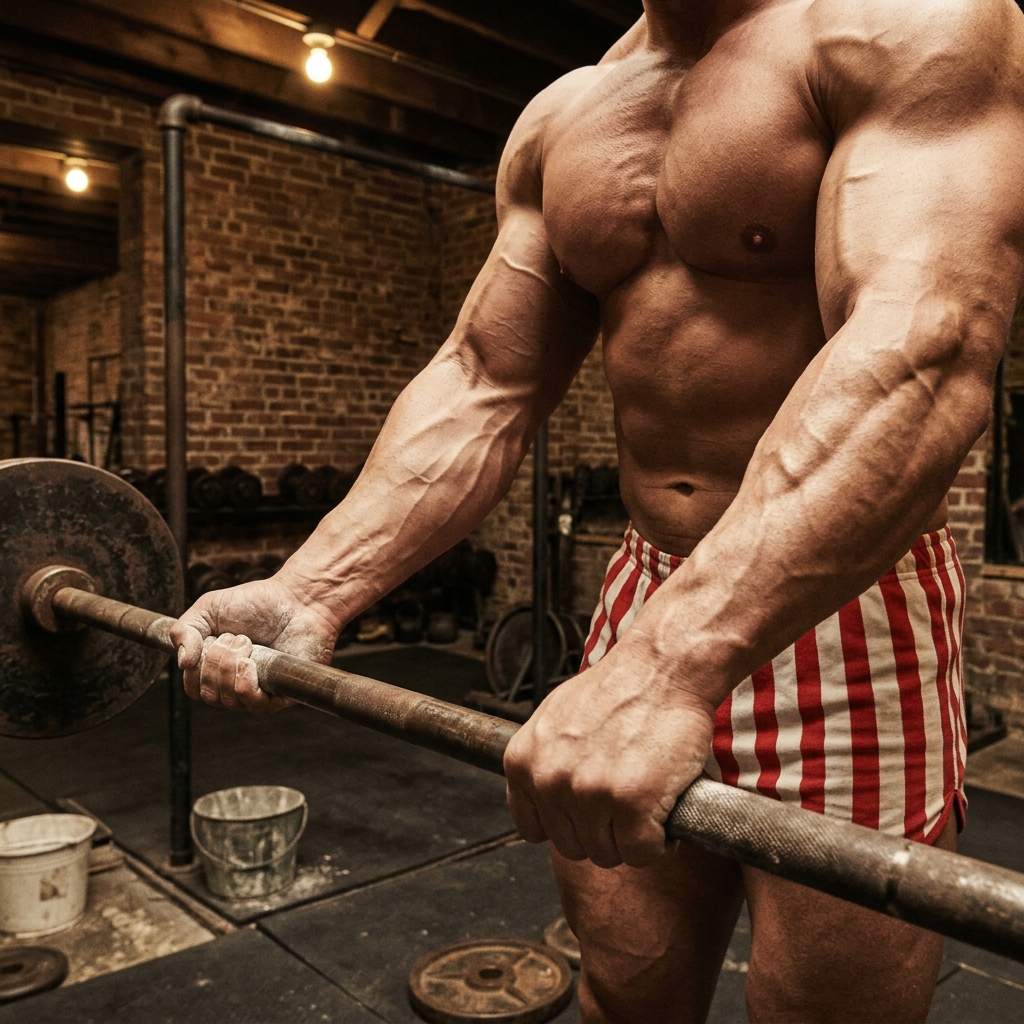
Ferrigno’s physical measurements during his competitive peak remain a subject of discussion among bodybuilding historians and sports scientists alike. His documented competition statistics — 6 feet 5 inches (196 cm) in height, weighing between 275 and 295 pounds (125–134 kg) in competition condition, with a reported chest measurement of 59 inches, bicep circumference of 22.5 inches, and a waist of approximately 34 inches — placed him in a category that virtually no athlete in history has approached while claiming natural status.
To contextualize these figures: the most rigorous scientific models of natural muscle-building potential, including the widely-cited work of researchers like Lyle McDonald and Alan Aragon, place the upper limit of total drug-free muscular development at roughly 25–26 pounds of lean muscle gained over a lifetime of training. Ferrigno’s measurements suggest a level of muscular development far exceeding what these models predict is achievable without pharmacological assistance — a point worth holding in mind as we examine the broader evidence.
The Steroid Era: What 1970s Professional Bodybuilding Actually Looked Like
Steroids Were Legal, Available and Normalized
Any discussion of steroid use by 1970s-era bodybuilders must begin with a critical legal and historical fact that is frequently overlooked in modern commentary: anabolic steroids were not controlled substances in the United States during the period when Lou Ferrigno was actively competing. The Anabolic Steroid Control Act of 1990 — signed into law by President George H.W. Bush on November 29, 1990, and effective as of February 27, 1991 — was the legislation that classified anabolic steroids as Schedule III controlled substances under the Controlled Substances Act.
Before that reclassification, anabolic steroids occupied a legal gray zone. Physicians could prescribe them, pharmacies could dispense them, and athletes could use them without violating any federal statute. The absence of moral or legal prohibition did not create steroid use among elite bodybuilders of the 1970s — it simply meant that use which was already occurring required no concealment. For those interested in the full legal and pharmacological context, the DEA scheduling of anabolic steroids as controlled substances remains the authoritative reference on when and how these compounds became federally regulated.
Elite bodybuilders of the era have spoken on this point with remarkable candor — most notably Arnold Schwarzenegger, who has publicly confirmed that he used testosterone and other anabolic steroids under the supervision of a physician during his competitive years, explicitly noting that this was legal practice at the time. This context is not offered as an excuse but as essential background information without which any assessment of 1970s bodybuilding physiques is fundamentally incomplete.
Common Compounds Used in the Golden Era
The pharmacological landscape available to elite bodybuilders in the early-to-mid 1970s was more limited than today but still included several potent compounds. Dianabol (methandienone), an oral anabolic steroid developed in the late 1950s, was the most widely used compound of the era — easily available by prescription, fast-acting, and highly effective at producing rapid increases in muscle mass and strength. Deca-Durabolin (nandrolone decanoate) was a favored injectable due to its relatively mild androgenic profile and strong anabolic effect. Testosterone enanthate and testosterone cypionate were also commonly used for their foundational anabolic and androgenic properties. Primobolan was favored by athletes who prioritized lean muscle gains with minimal water retention during contest preparation phases.
From a mechanistic standpoint, anabolic steroids: a review of the literature on NIH confirms that anabolic-androgenic steroids (AAS) exert their primary effects by binding to androgen receptors in muscle tissue, initiating genomic signaling pathways that increase nitrogen retention, accelerate protein synthesis, and stimulate red blood cell production — producing muscular growth and recovery rates that significantly exceed what is physiologically achievable through training alone. The National Institute on Drug Abuse provides a comprehensive lay overview of these mechanisms and their implications for long-term health.
Lou Ferrigno and Steroids: What He Has Actually Said
The 1988 Interview That Changed Everything
Lou Ferrigno has never made an explicit public confession naming specific anabolic compounds, specific dosages, or the details of any competitive preparation cycle. This is a critical factual distinction that must be maintained throughout any honest analysis. He has not done what Arnold Schwarzenegger eventually did — step forward and acknowledge specific substance use while contextualizing it within the legal framework of the time. That said, the nature of Ferrigno’s public statements on the subject has evolved considerably over the decades.
In a 1988 interview that has been widely cited by bodybuilding historians, Ferrigno addressed the realities of steroid use within professional bodybuilding with notable candor. Rather than categorically denying any association with or knowledge of PED use at the elite level, he offered reflections on how performance-enhancing drugs had shaped the sport’s culture, image, and health outcomes for athletes. The interview is frequently cited as evidence that Ferrigno was aware of and engaged with the steroid question in a way that distinguished him from athletes who adopted a posture of complete ignorance or denial — while stopping short of personal confession.
Generation Iron Vault: Addressing the Stereotypes
More recently, in his Generation Iron “GI Vault” interview (available on YouTube under the video ID x3lQoT6q_u8), Ferrigno addressed what he described as the damaging stereotypes surrounding bodybuilders — including the “dumb meathead and steroid” stereotypes that he argued reduced complex athletes to caricatures. In this conversation, Ferrigno discussed his awareness of the drug culture that permeated professional bodybuilding during his career and its long-term impact on the sport’s public perception and credibility. Notably, his framing was that of someone with insider knowledge and personal experience of this environment, not the framing of an outsider commenting on a culture he was separate from.
Publicly, Ferrigno has consistently attributed his physique to “hard work, genetics, and dedication” — the standard framing used by most professional bodybuilders of his generation regardless of their actual PED status. He has positioned himself as a critic of steroid abuse, warning publicly about the long-term health risks associated with performance-enhancing drug misuse. This implicit acknowledgment — distinguishing between responsible use and abuse — is itself revealing: it situates him as someone who understands the spectrum of steroid use from personal familiarity, not merely from reading about it. Crucially, he has never categorically stated that he competed without anabolic steroids.
The Pumping Iron Connection: Bodybuilding’s Most Famous Documentary
What Pumping Iron Showed — and What It Deliberately Left Out
Pumping Iron, the 1977 documentary directed by George Butler and Robert Fiore, documented the build-up to and execution of the 1975 Mr. Olympia competition in Pretoria, South Africa, and featured both Arnold Schwarzenegger and Lou Ferrigno as its central subjects. The film is considered a landmark in both sports documentary filmmaking and in shaping public perception of bodybuilding as a discipline. It brought both athletes extraordinary mainstream visibility and helped transition bodybuilding from a niche subculture into a broader pop culture phenomenon.
What the film did not contain — and this is not a minor omission — was any discussion of anabolic steroid use by any competitor. Not a single mention. This was not because the compounds were absent from the preparations of the athletes being filmed; by all available historical accounts from insiders, coaches, and historians of the sport, they were present and standard practice. The omission was a deliberate editorial choice made by the production team to maximize the film’s mainstream commercial appeal by presenting bodybuilding as a purely athletic endeavor of dedication and physical will. The filmmakers understood that frank depictions of legal-at-the-time pharmaceutical preparation would have undermined the heroic narrative they were constructing around the athletes.
Arnold’s Role and His Later Admissions
Arnold Schwarzenegger’s subsequent public acknowledgments are therefore directly relevant to assessing Ferrigno’s situation. Decades after Pumping Iron was released, Schwarzenegger openly confirmed in interviews and on his social media platforms that he had used anabolic steroids during his competitive career — specifically testosterone and Dianabol — under medical supervision and within the legal framework of the time. He has been explicit that the Congressional scheduling of steroids in 1990 changed the legal landscape retroactively, but that during his competitive years, these substances were obtained and used lawfully.
Arnold and Ferrigno trained in the same competitive ecosystem during the same years, competed at the same events against each other, and moved in the same social and professional circles within the sport. If steroids were standard practice for one, the logical implication — supported by the testimonies of numerous other bodybuilders of the era — is that they were standard practice for all who aspired to compete at the highest level. This does not constitute direct proof of Ferrigno’s use, but it provides powerful contextual evidence that the question “did he or didn’t he?” may be the wrong question to ask of any elite 1970s bodybuilder.
The Incredible Hulk and Ferrigno’s Hollywood Physique
Why CBS Cast a Bodybuilder Instead of Using CGI
From 1977 to 1982, Lou Ferrigno portrayed the Incredible Hulk in the CBS television series of the same name — becoming the last actor to play the character using his own physical body rather than computer-generated imagery. For the role, he was painted green (a process that required hours of preparation), fitted with a wig, and wore contact lenses, but the muscularity on screen was entirely his own. CBS cast Ferrigno precisely because no amount of costuming or prosthetics could replicate the sheer physical scale that his body provided, and CGI was not then available at the quality required for a weekly television production.
The casting requirement was demanding: Ferrigno needed to maintain a physique of approximately 275–285 pounds of lean muscle year-round across five seasons of television production, not merely for a few weeks of competition condition as in bodybuilding. Television production schedules are irregular and demanding in ways that make consistent training difficult, and the caloric demands of maintaining this mass are considerable. He later returned to the franchise in cameo roles in the 2003 Hulk film and the 2008 The Incredible Hulk, maintaining a physique well above what would be expected of a man in his mid-to-late fifties without pharmacological assistance. His 1983 film Hercules also required him to maintain extraordinary muscular size throughout production.
Maintaining the Hulk Physique: 1977–1982
Sports scientists and researchers who have studied the physiological demands of maintaining extreme muscle mass note that the nitrogen balance, protein synthesis rates, and hormonal environment required to sustain muscularity at the level Ferrigno displayed throughout the Hulk years are not achievable through training and nutrition alone. The anabolic steroids — MedlinePlus resource from the U.S. National Library of Medicine details the mechanisms by which these compounds alter protein metabolism in ways that make the maintenance of extraordinary muscle mass possible across extended periods. Without such pharmacological support, the physiological trajectory during the Hulk years — including the inevitable age-related decline in testosterone and growth hormone — would have resulted in significant muscle loss, not preservation of peak physique.
Ferrigno has discussed his training regimen extensively in public interviews, describing a dedication to weights and diet that is genuine and admirable. However, public discussions of training methodology rarely extend to the complete picture of pharmaceutical preparation that most bodybuilding historians agree accompanied even the most hard-working athletes of this era.
Ferrigno’s 1990s Comeback: Even Bigger at 40+
The 1992 Mr. Olympia Return at Age 41
Perhaps the most scientifically compelling piece of circumstantial evidence in the entire discussion came not from the 1970s but from 1992. After a 17-year absence from competitive bodybuilding, Lou Ferrigno made a widely publicized return to the Mr. Olympia stage at the age of 41 — competing in Las Vegas at a reported weight of approximately 315–320 pounds. He placed 12th in the competition. In 1993, he competed again and placed 10th. In 1994, he participated in the inaugural Masters Olympia competition, specifically designed for bodybuilders aged 40 and above.
The critical scientific detail is this: Ferrigno’s competition weight during this 1990s comeback period — 315+ pounds — was substantially larger than his peak competition weight during his 1970s prime, when he competed at approximately 275–285 pounds. He was not merely maintaining his physique into middle age; he was reporting a significant increase in muscular mass compared to the peak of his competitive years as a young man.
Masters Olympia and What His Size Suggests
From an endocrinological standpoint, this trajectory is essentially impossible to achieve naturally. After the age of approximately 30, natural testosterone levels in men decline at a rate of roughly 1–2% per year according to clinical data, while growth hormone secretion follows a similarly downward curve. The physiological environment of a 41-year-old man is, by every measurable hormonal marker, less conducive to building and maintaining muscle mass than that of the same man at 21 or 25. The natural expectation — absent pharmacological intervention — would be gradual muscle loss beginning in the late 20s or early 30s, not the acquisition of an additional 30–40 pounds of lean muscle in middle age.
The bodybuilding landscape of the early 1990s also introduced human growth hormone (HGH) as a more widely circulated compound among elite competitors, often used in combination with anabolic steroids to achieve greater mass with improved recovery. Many analysts of the sport specifically cite HGH use as a factor in the dramatic size increases observed among top bodybuilders of the early 1990s compared to their 1970s predecessors. The 1990 Mr. Olympia was the only drug-tested edition of the competition; the 1992 event that marked Ferrigno’s return was not subject to drug testing. Bodybuilding historians widely regard the combination of Ferrigno’s increased size at 41, the untested competitive environment, and the known pharmacological landscape of the early 1990s as strongly indicative of continued PED use during the comeback period.
Health Effects of Anabolic Steroids: The Medical Reality
Cardiovascular and Hormonal Consequences
Understanding the pharmacological context of golden-era bodybuilding is incomplete without examining the documented health consequences of the compounds that were central to that era. Research published in peer-reviewed journals, including comprehensive work on the health consequences of androgenic anabolic steroid use, identifies a range of serious adverse effects associated with prolonged AAS use — adverse effects that have claimed the lives of multiple golden-era bodybuilders at relatively young ages.
Cardiovascular consequences represent the most serious documented risk category. Anabolic steroids alter lipid profiles by increasing low-density lipoprotein (LDL) cholesterol while significantly suppressing high-density lipoprotein (HDL) cholesterol — a shift that accelerates the atherosclerotic process and increases the risk of coronary artery disease, myocardial infarction, and stroke. Research on the cardiovascular effects of anabolic steroids also documents left ventricular hypertrophy — pathological enlargement of the heart muscle — as a consequence of prolonged supraphysiological androgen exposure, a condition that predisposes individuals to potentially fatal arrhythmias and sudden cardiac death.
Endocrine disruption is another well-documented consequence. Exogenous anabolic steroids suppress the hypothalamic-pituitary-gonadal (HPG) axis — the hormonal feedback system that regulates natural testosterone production. Prolonged suppression leads to testicular atrophy, disruption of spermatogenesis, and, in some cases, permanent impairment of natural testosterone secretion requiring lifelong testosterone replacement therapy. Hepatic toxicity, particularly associated with 17-alpha-alkylated oral steroids like Dianabol, includes elevations in liver enzymes, cholestasis, and in severe cases, peliosis hepatis — a rare but potentially life-threatening condition characterized by blood-filled cavities in the liver. For a comprehensive lay overview, the steroid abuse in sports — Mayo Clinic resource provides clinically accurate guidance on recognized risks across all organ systems.
What Today’s Athletes Can Learn From the Golden Era
The golden era of bodybuilding is frequently romanticized in contemporary fitness culture — a romanticization that tends to strip the pharmaceutical context from the visual legacy it left behind. Young athletes who view photographs of Lou Ferrigno, Arnold Schwarzenegger, Franco Columbu, Frank Zane, and their contemporaries and internalize those physiques as achievable benchmarks for natural training are operating on fundamentally inaccurate information about human physiology.
The anabolic steroids — MedlinePlus information resource emphasizes that the use of these compounds without medical supervision and legitimate prescription carries significant legal and health consequences in the current regulatory environment. The compounds that were legally prescribed to athletes in the 1970s are the same substances that are now Schedule III controlled substances subject to federal enforcement, per the DEA’s scheduling of anabolic steroids as controlled substances. Understanding the historical context does not alter the present legal or medical reality.
The Verdict: Did Lou Ferrigno Use Steroids?
The Circumstantial Evidence Analyzed
Examined in totality, the circumstantial evidence bearing on this question is substantial and consistent. The case rests on multiple independent pillars rather than any single decisive fact. First, Ferrigno competed at the elite level of professional bodybuilding during a period when virtually every available historical account confirms that anabolic steroid use was universal among top competitors — not the practice of a few outliers but the norm of the sport. Second, he competed in an era with no drug testing whatsoever at any major event, removing the external constraint that testing programs impose on modern athletes. Third, his physical measurements during his 1970s competitive peak substantially exceeded the established scientific models of natural muscular development potential. Fourth, he maintained extreme muscularity year-round throughout his five-year tenure as the Incredible Hulk — a physiological demand inconsistent with what is achievable through training and nutrition alone. Fifth, his 1990s comeback at the age of 41 produced a physique measurably larger than his 1970s peak, a trajectory that is physiologically incompatible with natural hormonal aging.
Against this must be weighed the fact that Ferrigno has never made an explicit personal admission of steroid use during his competitive career. He has not followed Arnold’s path of eventual public acknowledgment. His public persona is built on attributing his achievements to genetics, work ethic, and determination — attributes that were undeniably real and significant factors in his success. The absence of a confession is not evidence of absence; it is simply the absence of confirmation.
Why It Matters — and Why It Doesn’t
The honest analytical verdict, based on the totality of contextual, physiological, and historical evidence, is that Lou Ferrigno almost certainly used anabolic steroids during his competitive career — as did essentially every top professional bodybuilder of his era — but has chosen, for personal or professional reasons, not to formally confirm the specific details publicly. This assessment is consistent with the known practices of the sport, with the scientific parameters of human physiology, and with the pattern of carefully worded statements he has made over the decades.
Why does this matter? For the modern athlete, understanding the pharmaceutical infrastructure underlying the golden-era physiques that continue to be circulated as aspirational imagery is essential for setting realistic training goals and making informed health decisions. The Lou Ferrigno biography — Wikipedia chronicles a career of extraordinary achievement; that career’s chemical context belongs in the same accounting if the historical record is to be complete and honest.
Why doesn’t it ultimately matter? Because Lou Ferrigno’s legacy stands on ground that PED status cannot easily diminish. His journey from a deaf child in Brooklyn to a double Mr. Universe champion, to an iconic television role that brought joy to millions, to decades of advocacy for the deaf and hard-of-hearing community — this represents a life of genuine accomplishment and meaningful public service that exists independently of the pharmacological questions surrounding his athletic career. The work ethic, the genetics, the psychological resilience required to compete at his level were real and extraordinary. The chemical context belongs in the historical record; it does not define the man or his legacy.
Frequently Asked Questions
Did Lou Ferrigno ever officially admit to using steroids?
No, Lou Ferrigno has never made an explicit public admission confirming the specific use of anabolic steroids during his competitive career. He has discussed the drug culture of professional bodybuilding and warned about the dangers of steroid abuse in public interviews, but he has not followed the path of athletes like Arnold Schwarzenegger who have explicitly confirmed personal use. His public statements have consistently attributed his physique to hard work, genetics, and dedication.
What steroids were commonly used by bodybuilders in the 1970s golden era?
The most commonly used anabolic compounds among elite bodybuilders of the 1970s included Dianabol (methandienone), an oral steroid prized for rapid mass gains; Deca-Durabolin (nandrolone decanoate), an injectable with strong anabolic and relatively mild androgenic properties; testosterone enanthate and testosterone cypionate, used as foundational compounds; and Primobolan, valued for lean muscle gains with minimal water retention. All of these compounds were legally available by physician prescription in the United States during this period, prior to their scheduling as controlled substances under the Anabolic Steroid Control Act of 1990.
How did Lou Ferrigno get so big for the Incredible Hulk role?
Ferrigno’s extreme muscularity when cast as the Incredible Hulk was the result of his competitive bodybuilding career, during which he had built one of the most muscular physiques ever documented in the sport. CBS specifically sought a professional bodybuilder for the role because CGI technology was not sufficiently advanced in the late 1970s to create a convincing character digitally. He reportedly maintained approximately 275–285 pounds of muscle during the show’s run from 1977 to 1982, a feat that required intensive and continuous training. The full pharmacological picture of how this mass was maintained year-round has never been publicly detailed by Ferrigno.
Was steroid use legal during Lou Ferrigno’s competitive bodybuilding career?
Yes, during Lou Ferrigno’s primary competitive career in the 1970s, anabolic steroids were not classified as controlled substances in the United States. They were legal to prescribe and dispense by physicians and pharmacies respectively. The Anabolic Steroid Control Act of 1990, signed November 29, 1990 and effective February 27, 1991, was the legislation that reclassified anabolic steroids as Schedule III controlled substances under federal law. This means that any steroid use during Ferrigno’s 1970s competitive years would have occurred within the legal framework of the time, not in violation of it.
How does Lou Ferrigno’s physique compare to natural bodybuilding limits?
Scientific models of maximum natural muscular development — based on the research of sports nutrition researchers including Lyle McDonald and Alan Aragon — estimate that the upper limit of drug-free muscular development for a male athlete, over a lifetime of optimized training, is approximately 25–26 pounds of total muscle gained. Ferrigno’s documented competition measurements (6’5″, 275–295 lbs with extremely low body fat) substantially exceed what these models predict is achievable without anabolic pharmacological assistance. His 1990s comeback physique of 315+ pounds at age 41 presents an even more dramatic deviation from natural physiological expectations, given the hormonal decline associated with aging.
Did Arnold Schwarzenegger admit to steroid use during the same era as Ferrigno?
Yes. Arnold Schwarzenegger has publicly and explicitly confirmed that he used anabolic steroids — specifically testosterone and Dianabol — during his competitive bodybuilding career under the supervision of a physician. He has consistently emphasized that these substances were legal at the time and used within the existing regulatory framework. Schwarzenegger competed directly against Ferrigno at the 1974 and 1975 Mr. Olympia competitions and trained in the same professional environment. His admissions provide important contextual evidence about the universal nature of PED use among elite bodybuilders of that era.
What happened when Lou Ferrigno returned to bodybuilding in 1992?
After a 17-year absence from competitive bodybuilding, Ferrigno made a highly publicized return to the Mr. Olympia stage in 1992 at the age of 41, placing 12th. He competed again in 1993 (10th place) and 1994 (Masters Olympia). Notably, his competition weight during this comeback period was reported at approximately 315–320 pounds — significantly larger than his 1970s peak competition weight of 275–285 pounds. Building substantially more muscle mass in one’s forties than in one’s twenties is not consistent with natural hormonal physiology, where testosterone and growth hormone levels decline with age. Bodybuilding historians widely view this size increase as indicative of continued and potentially enhanced PED use during the comeback years.
Get our latest guides, news, and insights highlighted in your Google Search & AI Overviews.