Every day, thousands of people are prescribed both a muscle relaxer and a corticosteroid simultaneously—often for acute back pain, herniated discs, or severe inflammatory flares. But what actually happens inside your body when these two drug classes collide? And what about athletes or bodybuilders who combine illicit anabolic steroids with prescription muscle relaxants? The clinical answer is highly nuanced: while common corticosteroids and oral muscle relaxers generally have no major direct pharmacological interaction, the risk profile changes drastically depending on which specific drugs are combined, the dosage, duration, your individual health status, and whether anabolic-androgenic steroids enter the equation. This safety guide breaks down the clinical evidence, the real risks, and the non-negotiable rules for combining these substances safely.
Understanding the Two Drug Classes: Muscle Relaxers vs. Steroids
What Are Skeletal Muscle Relaxants?
Before assessing interactions, it is crucial to understand how these drugs operate independently. Skeletal muscle relaxants (such as cyclobenzaprine, baclofen, methocarbamol, and carisoprodol) are central nervous system (CNS) depressants. They do not act directly on the muscle tissue itself; instead, they act at the spinal or supraspinal level to dampen the nerve signals that cause painful muscle spasms.
Corticosteroids vs. Anabolic-Androgenic Steroids: A Critical Distinction
The term “steroid” creates significant medical confusion because it encompasses two vastly different classes of drugs. Corticosteroids (like prednisone, methylprednisolone, and dexamethasone) are powerful anti-inflammatory medications prescribed by doctors. Anabolic-androgenic steroids (like testosterone or nandrolone) are synthetic derivatives of male hormones, frequently misused for performance enhancement. The interaction profiles and organ risks for muscle relaxers differ entirely depending on which type of steroid you are taking.
Muscle Relaxers and Corticosteroids Together: What the Clinical Evidence Shows
No Major Pharmacological Interaction—But Why They’re Co-Prescribed
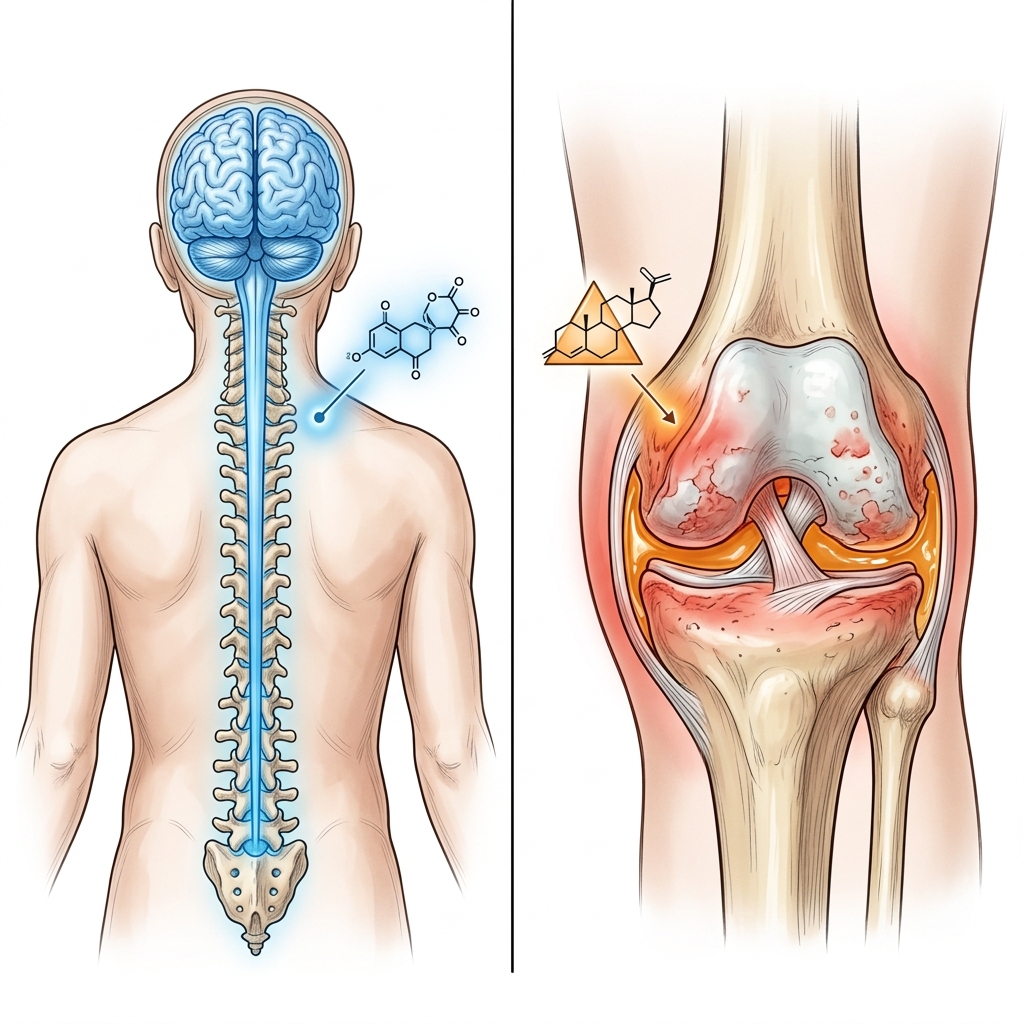
According to standard pharmacological interaction checkers, there is no clinically significant direct pharmacokinetic interaction between common oral muscle relaxers and corticosteroids. They operate via entirely different mechanisms: the corticosteroid suppresses inflammation at the cellular level by binding to glucocorticoid receptors, while the muscle relaxant suppresses hyperactive CNS signaling. This lack of direct chemical conflict is exactly why doctors frequently prescribe them together for severe acute musculoskeletal pain, effectively targeting both the root inflammation and the resulting symptomatic spasm.
When Co-Prescription Makes Clinical Sense
While co-prescription is common, it is worth noting that clinical guidelines from the American College of Physicians suggest systemic oral corticosteroids are generally ineffective for non-radicular low back pain, though they may offer limited benefits for radicular pain (like severe sciatica). Regardless, when prescribed together, FDA guidelines strictly advise that muscle relaxers be used only for short-term relief, typically a maximum of 2 to 3 weeks.
Specific Drug Pair Analysis: Which Combinations Matter Most
Cyclobenzaprine + Prednisone: The Most Common Pairing
This is arguably the most frequent pairing. There is no direct interaction documented. However, cyclobenzaprine causes significant sedation and has anticholinergic effects, while prednisone is notorious for causing insomnia, agitation, and mood changes. While they don’t clash chemically, their opposing side effects can create a challenging subjective experience for the patient.
Baclofen, Methocarbamol, and Carisoprodol (Soma)
For other combinations:
- Methocarbamol + Steroids: Methocarbamol has the gentlest CNS side-effect profile and is generally the most well-tolerated when combined with corticosteroids.
- Baclofen + Steroids: Preclinical animal studies show some nuance where short-term corticosteroids might enhance baclofen’s muscle-relaxant effect, but no human contraindication exists.
- Carisoprodol (Soma) + Steroids: Carisoprodol is metabolized into meprobamate (a barbiturate-like compound) and is a DEA Schedule IV drug due to its high addiction potential. Furthermore, if the Soma Compound (which includes aspirin) is combined with steroids, the risk of severe gastrointestinal bleeding increases dramatically.
Muscle Relaxers and Anabolic Steroids: A Different and More Serious Risk Profile
Hepatotoxicity: Compounding Liver Burden
For athletes and bodybuilders, combining muscle relaxers with anabolic steroids introduces severe risks. Oral anabolic steroids (like oxandrolone, stanozolol, and oxymetholone) are highly hepatotoxic (liver-toxic). Many muscle relaxers are also metabolized by the liver. Stacking these drugs significantly increases the cumulative liver burden, drastically elevating the risk of cholestasis and severely elevated liver enzymes (AST/ALT).
Cardiovascular Risks and Masked Warning Signs
Anabolic steroid use is strongly associated with left ventricular hypertrophy, hypertension, and arrhythmias. Muscle relaxers like cyclobenzaprine can cause mild tachycardia (rapid heart rate). More concerningly, if a user is heavily sedated by a muscle relaxer, they may miss early physiological warning signs of a cardiovascular event. Studies on polypharmacy among AAS users show that those mixing steroids with CNS drugs face significantly higher morbidity rates.
CNS Depression Risk: When the Combination Becomes Genuinely Dangerous
The Triple Threat: Muscle Relaxers + Opioids + Alcohol
The genuine danger in pain management rarely comes from steroids and muscle relaxers alone. The risk of fatal respiratory depression skyrockets when a “triple threat” is formed by adding opioids, alcohol, or benzodiazepines. Because corticosteroids can cause severe insomnia, patients sometimes self-medicate with alcohol or sleep aids alongside their muscle relaxer, creating a highly dangerous cascade of CNS depression.
Beers Criteria Warning for Older Adults on Steroids
For patients over 65, the risk matrix changes. Older patients are more likely to be on long-term corticosteroid therapy for conditions like rheumatoid arthritis or COPD. The American Geriatrics Society Beers Criteria lists carisoprodol, cyclobenzaprine, and methocarbamol as potentially inappropriate for older adults due to age-related metabolic changes. Adding these to a steroid regimen substantially elevates the risk of falls, which is particularly dangerous given steroid-induced bone thinning.
Safety Guidelines: How to Minimize Risk If Both Are Prescribed
Questions to Ask Your Doctor or Pharmacist
If you are prescribed both drug classes, adhere to these safety guidelines:
- Full Disclosure: Always disclose every substance you take, including over-the-counter meds, supplements, alcohol, and illicit anabolic steroids.
- Duration Limits: Use muscle relaxers strictly for the short-term duration prescribed.
- Tapering: Follow your corticosteroid taper schedule perfectly. Abruptly stopping steroids can cause adrenal insufficiency and a rebound in severe pain.
Red-Flag Warning Signs That Require Immediate Medical Attention
Seek emergency medical care immediately if you experience extreme or unusual drowsiness, difficulty breathing, slowed respiration, chest pain, palpitations, yellowing of the skin or eyes (jaundice), or sudden confusion.
Can You Take a Muscle Relaxer With Steroids? Clinical Safety Analysis
When recovering from severe back spasms, sciatica, or acute sports injuries, patients commonly ask: can you take a muscle relaxer with steroids? From a medical standpoint, combining an oral corticosteroid (such as Prednisone, Methylprednisolone, or Dexamethasone) with a skeletal muscle relaxant (such as Cyclobenzaprine/Flexeril, Methocarbamol/Robaxin, or Baclofen) is a standard orthopedic and pain-management strategy.
Steroids address systemic inflammation and nerve root edema, while muscle relaxants act centrally on the nervous system to relieve muscle guarding and painful spasms. However, specific pharmacokinetic interactions must be managed.
Corticosteroid & AAS Interactions with Cyclobenzaprine and Methocarbamol
- Central Nervous System (CNS) Effects: Muscle relaxants cause marked drowsiness, dizziness, and psychomotor impairment. When combined with the insomnia and agitation occasionally induced by high-dose steroids, patients may experience disrupted sleep architectures.
- Hepatic Metabolism: Both drug classes undergo hepatic metabolism via cytochrome P450 pathways. Patients with pre-existing liver impairment should have liver enzymes monitored.
- Interaction with Anabolic Steroids (AAS): Bodybuilders using AAS who experience acute muscle strains can generally use muscle relaxants safely under physician guidance, provided blood pressure is controlled and CNS sedatives are avoided.
Safer Alternatives and When to Consider Other Options
Non-Pharmacological Approaches for Muscle Spasm Relief
Before relying on polypharmacy, consider evidence-based alternatives. Clinical evidence frequently shows that physical therapy equals or outperforms pharmacological combinations for chronic musculoskeletal conditions. For acute flares, targeted stretching, ice/heat therapy, TENS units, and professional massage can provide substantial relief without drug interactions.
When a Single Drug Can Address Both Inflammation and Spasm
In many cases, polypharmacy can be avoided entirely. Non-Steroidal Anti-Inflammatory Drugs (NSAIDs), if tolerated by the patient’s stomach and kidneys, can often address both the underlying inflammation and the resulting muscle spasm with a single agent. Additionally, for severe radicular pain, localized Epidural Steroid Injections (ESIs) can deliver potent corticosteroids directly to the site of inflammation, drastically reducing the systemic drug exposure required by oral steroid pills.
Get our latest guides, news, and insights highlighted in your Google Search & AI Overviews.