If your period has gone missing or arrived weeks off schedule after starting steroids, you’re not imagining it — and you’re far from alone. Both anabolic-androgenic steroids (AAS) and corticosteroids like prednisone are known to interfere with the complex hormonal signals that drive your menstrual cycle. Depending on the type of steroid, the dosage, and how long you’ve been using it, the delay can range from a few days to complete amenorrhea lasting for months. Understanding exactly why this happens — and what a realistic recovery timeline looks like — is critical for anyone using or considering these compounds.
Two Very Different Steroids, One Common Problem
Anabolic-Androgenic Steroids (AAS) and Menstrual Disruption
Anabolic-androgenic steroids are synthetic derivatives of testosterone, typically utilized for performance enhancement and muscle growth. Because they introduce massive amounts of exogenous androgens into the female body, they cause severe and often prolonged suppression of the reproductive system. The disruption is aggressive, frequently leading to the complete cessation of the menstrual cycle.
Corticosteroids (Prednisone, Cortisone) and Period Irregularity
On the other hand, corticosteroids (such as prednisone or cortisone injections) are anti-inflammatory drugs used to treat autoimmune disorders, severe allergies, and joint pain. While they do not introduce androgens, they mimic cortisol and suppress the hypothalamic-pituitary-adrenal (HPA) axis. Because the HPA axis heavily cross-talks with the reproductive axis, corticosteroids still cause menstrual disruption, though it is generally milder and more temporary than AAS.
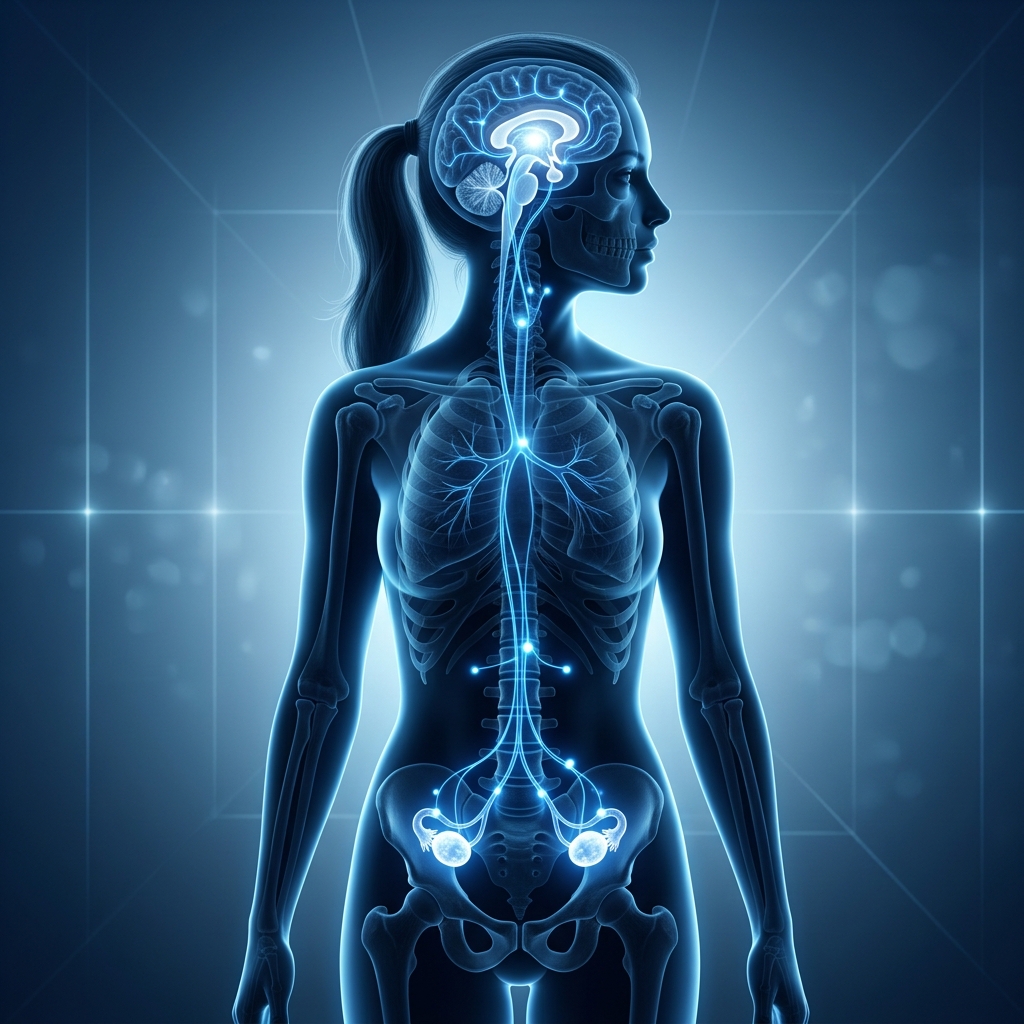
The Hormonal Mechanism: Why Steroids Disrupt Your Cycle
HPG Axis Suppression: LH, FSH, and the Ovulation Chain Reaction
The menstrual cycle is governed by the hypothalamic-pituitary-gonadal (HPG) axis. Normally, the hypothalamus releases GnRH, which signals the pituitary gland to secrete Luteinizing Hormone (LH) and Follicle-Stimulating Hormone (FSH). These hormones trigger ovarian follicle development, ovulation, and the subsequent release of estrogen and progesterone. Exogenous steroids (both anabolic and catabolic) signal the hypothalamus to drastically reduce GnRH output. Without GnRH, LH and FSH plummet, the ovulation chain reaction collapses, and menstruation stops.
How Excess Androgens Mimic PCOS-Like Hormonal Chaos
When a female introduces anabolic steroids, the excess androgens create a physiological environment remarkably similar to Polycystic Ovary Syndrome (PCOS). According to clinical reviews on androgenic steroid excess in women, the elevated testosterone levels heavily suppress LH and FSH while simultaneously disrupting normal follicular development, leading directly to anovulation and amenorrhea.
How Long Can Steroids Actually Delay Your Period?
Corticosteroid Injections and Short-Term Delays (Days to Weeks)
For women receiving localized corticosteroid injections (like a cortisone shot for joint pain) or short oral courses of prednisone, menstrual delays typically range from a few days to two or three weeks. Medical studies have observed that cycle disruptions—including both delays and unexpected bleeding—usually manifest within the first six weeks following the injection and resolve naturally once the drug clears the system.
Anabolic Steroids and Prolonged or Absent Periods (Weeks to Months)
Anabolic steroid use produces far more profound delays. Irregular periods (oligomenorrhea) often appear early in a cycle. With continued use, complete amenorrhea is highly common. In many cases, female athletes report their cycles stopping entirely within the very first month of AAS use. The duration of this amenorrhea scales directly with the dosage and the length of the steroid cycle, with recovery sometimes taking many months post-cessation.
Specific Steroids and Their Menstrual Impact
Which Anabolic Steroids Are Worst for the Menstrual Cycle?
The compounds most aggressively associated with menstrual disruption are those with high androgenic activity or potent suppressive qualities. This includes Testosterone (all esters), Trenbolone, Nandrolone (Deca-Durabolin), and Stanozolol (Winstrol). Even Oxandrolone (Anavar), which is popular among women for its milder androgenic profile, is highly suppressive to the HPG axis. Classic studies demonstrate that anabolic steroids actively depress plasma progesterone and LH, severely shortening or eliminating the luteal phase.
Does Route of Administration Matter (Oral vs. Injectable)?
Yes. Oral AAS often act rapidly, producing sudden hormonal fluctuations that can halt a period almost immediately. Injectable steroids, particularly those with long-acting esters, release hormone slowly over time. This means that even after the injections stop, the suppressive compounds remain active in the bloodstream for weeks, significantly prolonging the time it takes for the period to return.
Warning Signs: When Menstrual Disruption Becomes a Bigger Problem
Secondary Amenorrhea: When Your Period Disappears Entirely
Secondary amenorrhea is medically defined as the absence of menstruation for three or more consecutive months in a woman who previously had regular cycles. While AAS-induced amenorrhea shares the same HPG suppression pathway as the hypothalamic amenorrhea seen in extreme female athletes, the exogenous androgen load carries additional risks. If your period has been absent for more than three months, it is a significant clinical red flag.
Fertility Implications and Long-Term Reproductive Health
Anovulation during AAS use means that natural fertility plummets; however, because the hormonal environment is chaotic, ovulation can occasionally break through unpredictably. Therefore, relying on steroids as contraception is highly dangerous. Long-term, research suggests prolonged AAS use may lead to follicular degeneration. While menstrual disruption is usually reversible, certain virilizing side effects (like vocal cord thickening) are permanent.
Recovery Timeline: When Will Your Period Come Back?
Corticosteroid Recovery: Days to a Few Weeks
Because corticosteroids do not permanently alter the reproductive axis, recovery is usually swift. Once the medication is fully metabolized, the HPA and HPG axes resume normal communication. Most women see their menstrual cycle normalize within one to two natural cycles after stopping the medication.
AAS Recovery: Months of Patience and What Helps
For anabolic steroid users, recovery is a waiting game. Gonadotropin (LH/FSH) levels typically begin recovering within 3 to 6 months after cessation. For some, the period returns within 1 to 3 months; for those coming off prolonged, high-dose cycles, it can take 6 to 12 months. Low body fat—common in fitness competitors—independently suppresses the HPG axis, compounding the delay. To support recovery, ensure adequate caloric intake, manage stress, and reduce extreme training intensity.
What to Expect: A Practical Timeline for Women
Short Cycle vs. Prolonged AAS Use
Here is a practical timeline to gauge your expectations:
- Weeks 1–4 of AAS use: Cycle irregularity, spotting, or a skipped period.
- Weeks 4–8 of AAS use: High likelihood of complete amenorrhea.
- Months 1–3 post-cycle: Hormonal fluctuation, possible spotting as the HPG axis slowly restarts.
- Months 3–6 post-cycle: Most women coming off shorter, moderate cycles see their periods return.
- Months 6–12+ post-cycle: Prolonged wait times for heavy users or those maintaining very low body fat.
Post-Cycle Hormonal Monitoring and Medical Support
Tracking your symptoms using cycle-tracking apps (like Clue or Flo) is highly recommended. If your period has not returned after 6 months of being entirely off anabolic steroids, medical evaluation is essential to rule out permanent endocrine dysfunction or other underlying conditions.
Talking to Your Doctor: What to Tell Them
When seeking medical help for a steroid-induced delayed period, full transparency is critical. Tell your doctor the exact type of steroid used, the dosage, the duration, the route of administration, and the date of your last normal cycle. Request a comprehensive hormone panel including FSH, LH, estradiol, AMH (to check ovarian reserve), total testosterone, SHBG, TSH, and prolactin. This data is vital for a physician to differentiate between drug-induced suppression and other potential causes like thyroid disease or inherent PCOS.